
Lanterns Over Wisconsin: The Digital Trail of Nikki Vanderheyden's Last Walk
Nicole “Nikki” Vanderheyden spent the evening of May 20 2016 laughing with friends in Green Bay, Wisconsin. She had given birth to her youngest son six months earlier and rarely got nights out. An energetic substitute teacher and mother of three, she was known for her bright smile and caring spirit. That Friday she met her boyfriend Douglass Detrie and friends at a concert at The Watering Hole. The group hopped between bars; by the time they reached a popular downtown spot later called the Sardine Can, the mood had shifted. Nikki and Detrie argued over text messages, jealousy sparked, and she stormed away into the night.
In the early hours that followed, Detrie headed home believing Nikki would return. She never did. Angry texts from her phone went unanswered, then her line went silent. The next day a farmer in nearby Bellevue discovered a body in his field. The victim had been badly beaten and strangled, her socks still on and a pink club wristband still wrapped around her wrist. It was Nikki. Police soon found her discarded clothing, purse and mobile phone along a highway ramp. The discovery shocked the tight‑knit community of Brown County and shattered a family. Investigators quickly zeroed in on Detrie. Blood stains were spotted in his garage and vehicle, and he hadn’t reported Nikki missing until late that afternoon. Deputies arrested him and held him on suspicion of killing the mother of his child.
The evidence pointing at Nikki’s boyfriend began to unravel thanks to technology. During questioning, officers noticed Detrie was wearing a fitness tracker. Data extracted from the device showed he barely moved during the hours Nikki was killed, contradicting theories that he dragged a body out of his house or down an embankment. Digital evidence also showed he stayed inside their home while Nikki was murdered elsewhere. After eighteen days in jail, Detrie was released. Deputies later said the technology not only helped them avoid wrongfully charging him, it redirected their investigation entirely.
Three months after Nikki’s death, DNA found on one of her socks produced a match in a national database. The profile belonged to George Steven Burch, a towering, 6‑foot‑7 drifter from Virginia who had moved to Green Bay in March 2016. Investigators learned he’d been questioned in an unrelated hit‑and‑run shortly after the murder. During that inquiry, he allowed police to download the contents of his mobile phone. Detectives obtained the archived data and were stunned by what they saw. Location records placed Burch’s phone at a bar called Richard Craniums around 2:30 a.m., then at Nikki’s house for nearly an hour, then at the field where her body was found and the highway ramp where her clothes were tossed. By 4:22 a.m. the phone returned to his home. Surveillance video showed him on his porch that morning smoking a cigarette.
Investigators quietly watched Burch for weeks while assembling a case. On a rainy September day four months after the murder, officers pulled him over and arrested him for first‑degree intentional homicide. In court filings, prosecutors alleged he beat and strangled Nikki during a violent encounter outside her home, then dumped her body. Burch insisted he was innocent. He claimed he met Nikki at a bar, flirted with her, and drove her home; he said she consented to sex in his vehicle. According to his testimony, Detrie suddenly appeared, knocked him out and killed Nikki, then forced him at gunpoint to move her body to the field. He admitted discarding her clothes and never called police. Detectives and prosecutors called his version of events implausible, pointing to his DNA on her sock and the digital trail mapping his movements that night.
An Energetic Life Cut Short
Nikki Vanderheyden grew up in a small Wisconsin town and graduated from high school in 2003. Friends and family described her as vibrant and kind, a young woman who loved hiking, kayaking and music. She worked as a substitute teacher and was raising two children from a previous relationship along with infant son Dylan. Those close to her say she brought light and laughter into any room and was excited to build a life with Detrie. The night she disappeared, Nikki sent a stream of emotional messages to him, accusing him of talking to another woman and being unfaithful. She was last seen on foot leaving the Sardine Can bar before midnight, angry and alone.
Her disappearance and death reverberated through Brown County. Within hours, searchers combed the area, but it was a farmer miles away who stumbled upon her body the next afternoon. Nikki’s funeral drew hundreds who mourned the loss of a young mother with a generous heart. On what would have been her thirty‑second birthday, family and friends released lanterns over Lake Michigan to honor her memory. They have since channeled their grief into raising her children and advocating for justice.
From Bars to Fields: Unraveling the Night
The investigation into Nikki’s death combined old‑fashioned police work with cutting‑edge technology. Detectives canvassed bars, collected surveillance footage and interviewed dozens of patrons who’d seen the argument between Nikki and Detrie. They searched the couple’s home and collected cord-like wires from the garage, hoping to link them to the strangling. The initial evidence seemed damning for Detrie: there were bloodstains on his garage floor, and he had waited many hours to report Nikki missing. Yet his alibi rested on his wrist. Data pulled from his fitness tracker recorded only a handful of steps during the window when Nikki was killed, suggesting he had been asleep on his couch. Investigators also examined his phone records, which showed no travel away from the house.
When the crime lab backlog finally allowed technicians to test more items, a sock from the crime scene generated the DNA profile that shifted the case. George Burch’s name emerged from a national database. Detectives learned he had moved north seeking a fresh start and was staying with a friend who had loaned him a red Chevrolet Blazer. That same vehicle had been involved in a hit‑and‑run and later burned. When officers ran Burch’s name through local systems, they located the accident report and discovered that his phone had been seized. With the help of a tech analyst, they subpoenaed Google to provide location data from Burch’s phone. The records combined cellphone tower signals, Wi‑Fi hotspots and GPS to track the device every minute. The trail lined up perfectly with the murder: from the bar to Nikki’s home, then to the dump site and the highway ramp. Investigators also found his DNA on Nikki’s clothing and body.
At trial in February 2018, prosecutors presented more than fifty witnesses. Forensic experts testified that Nikki suffered over two hundred injuries and died from strangulation and blunt‑force trauma. The pathologist described bruises and lacerations consistent with a brutal struggle. A dental expert had been required to identify her because her face was so battered. Analysts told jurors that Burch’s phone pings matched the locations where Nikki’s body and clothing were found, and that Detrie’s fitness tracker showed he was inactive during the critical hours. Nikki’s texts showed she was angry at Detrie but gave no hint she intended to meet a stranger. The defense countered that digital devices can be inaccurate and argued that Detrie had motive and opportunity. Burch took the stand and repeated his story that Detrie killed Nikki. Jurors watched him recount being forced at gunpoint to move her body. Prosecutors, however, highlighted inconsistencies: if Burch had been knocked unconscious, there were no visible injuries on his head; if Detrie was the killer, why allow Burch to live; and why would Nikki agree to sex in a vehicle mere feet from her sleeping baby and babysitter.
After nine days of testimony, the jury deliberated just over three hours. They returned a verdict of guilty for first‑degree intentional homicide. At sentencing, the judge noted the brutality of the crime, telling Burch he would die in prison. Wisconsin has no death penalty, so life without parole was the harshest punishment available. In 2019 Burch appealed, arguing that police should not have accessed the cell data downloaded during the hit‑and‑run investigation and that the Fitbit evidence required expert explanation. The case went directly to the state’s high court because of the novel legal questions. In June 2021 the Wisconsin Supreme Court upheld his conviction in a four to three decision, ruling there was no law enforcement misconduct and that jurors could understand basic step‑count data without expert testimony. Dissenting justices warned the ruling set a precedent for unchecked digital searches. Burch remains incarcerated at a secure state facility. He continues to maintain that he was framed, but no higher court has agreed to review the case.
Evidence Revealed: Investigators’ Discoveries
Investigators eventually pieced together a clear picture of what happened. Nikki had been brutally beaten and strangled. Her battered body was discovered in a field in Bellevue on May 21 2016, and the following searches uncovered her clothing, purse and phone along a nearby highway ramp, indicating a hasty attempt to hide evidence.
Suspicion initially focused on Douglass Detrie because of bloodstains in his garage and his delay in reporting Nikki missing. Yet digital information from his fitness tracker and mobile phone proved he was at home and largely inactive during the hours of the killing. This unexpected electronic alibi spared him from being wrongly charged and redirected the investigation.
Forensic testing on a sock found at the scene produced a DNA match to George Steven Burch. Further analysis revealed his genetic material on Nikki’s clothing and body. Investigators also obtained location data from Burch’s phone showing his movements between the bar where Nikki was last seen, her home, the field where her body was dumped and the highway ramp where her belongings were discarded. A wire similar to the strangling cord was discovered in the couple’s garage, but it could not be conclusively tied to Detrie.
Burch was tried and convicted of first degree intentional homicide in March 2018. The judge imposed a life sentence without the possibility of parole. In 2021 the state’s highest court affirmed the verdict, concluding that the digital evidence was lawfully obtained and admissible. As of 2025, Burch remains imprisoned in Wisconsin and authorities have not named any other suspects.
Questions That Linger
Despite the conviction, many aspects of Nikki’s final hours remain unanswered. Detectives still do not know precisely how she and George Burch came into contact. Did they strike up a conversation at one of the bars, or did he follow her after she angrily left the Sardine Can? Loved ones struggle to understand why a young mother would engage with a stranger near her home when her baby and babysitter were inside. The possibility that she was coerced or forced has never been resolved.
There is also uncertainty over whether Burch acted entirely on his own. Some have speculated that others may have participated in the assault or helped to conceal it, though no evidence has surfaced to support this theory. Investigators have not established a motive for the extreme violence, nor have they found any prior connection between Nikki and Burch. Acquaintances have questioned whether Burch could be responsible for other unsolved crimes in Wisconsin or elsewhere, though no additional charges have been brought. The case further raises broader questions about how law enforcement should handle location data collected during unrelated investigations, sparking a continuing debate about privacy and police procedure.
Those Intertwined in Nikki’s Story
Nicole “Nikki” Vanderheyden – Victim – 31‑year‑old mother of three, substitute teacher, daughter of Steve and Vicki Meyer.
Douglass Detrie – Boyfriend/fiancé – Nikki’s partner and father of their infant son, initially arrested then cleared.
George Steven Burch – Convicted killer – Drifter from Virginia, stood 6 feet 7 and weighed around 250 pounds, convicted of Nikki’s murder and serving life without parole.
Dylan Detrie – Child – Nikki and Douglass’s infant son who was asleep in the home during the crime.
Michaela and Tyler – Children – Nikki’s two older children from a previous relationship, visiting their father that weekend.
Steve and Vicki Meyer – Parents – Nikki’s mother and father who fought for justice and cared for her children after her death.
Tiffany Hoffman – Friend – Nikki’s longtime friend who described her as full of light and attended court proceedings.
Sgt. Brian Slinger – Investigator – Brown County sheriff’s sergeant who led the homicide investigation and focused on digital evidence.
Sgt. Rick Loppnow – Investigator – Brown County detective who reviewed surveillance and helped interpret phone data.
Continue Investigating

Christmas Eve Vanishing: The Camila Mendoza Olmos Story
Christmas Eve Vanishing: The Camila Mendoza Olmos Story Camila Mendoza Olmos, a 19-year-old college student in northwest Bexar County, Texas, disappeared on the morning of Wednesd

Behind the Locked Door: The Ty and Bryn Larson Custody Battle and the 54-Day Barricade
The Ty and Bryn Larson case became one of the most controversial and widely discussed family court stories in recent years after two Utah siblings barricaded themselves inside an u
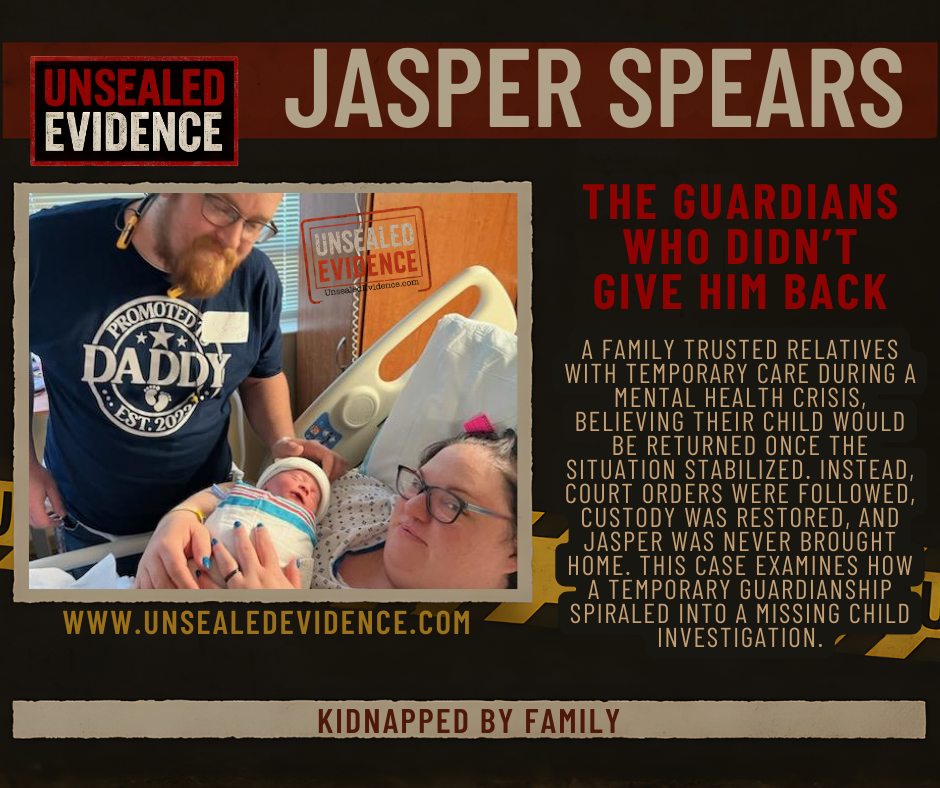
The Guardians Who Didn’t Give Him Back: Jasper Michael Spears
The Guardians Who Didn’t Give Him Back: The Disappearance of Jasper Michael Spears The Hospital Visit That Started Everything Jasper Michael Spears was born on November 6,

The Strongsville Impact: The Deaths of Dominic Russo and Davion Flanagan
In the early morning hours of July 31, 2022, a devastating crash in Strongsville left 20-year-old Dominic Russo and 19-year-old Davion Flanagan dead after a Toyota Camry driven by

The Day the Silence Broke: A Human Account of the Carly Gregg Tragedy
March 19, 2024. A Tuesday. In the quiet, unassuming town of Brandon, Mississippi, a day that began with the mundane rhythm of school and work would spiral into a vortex of horror,
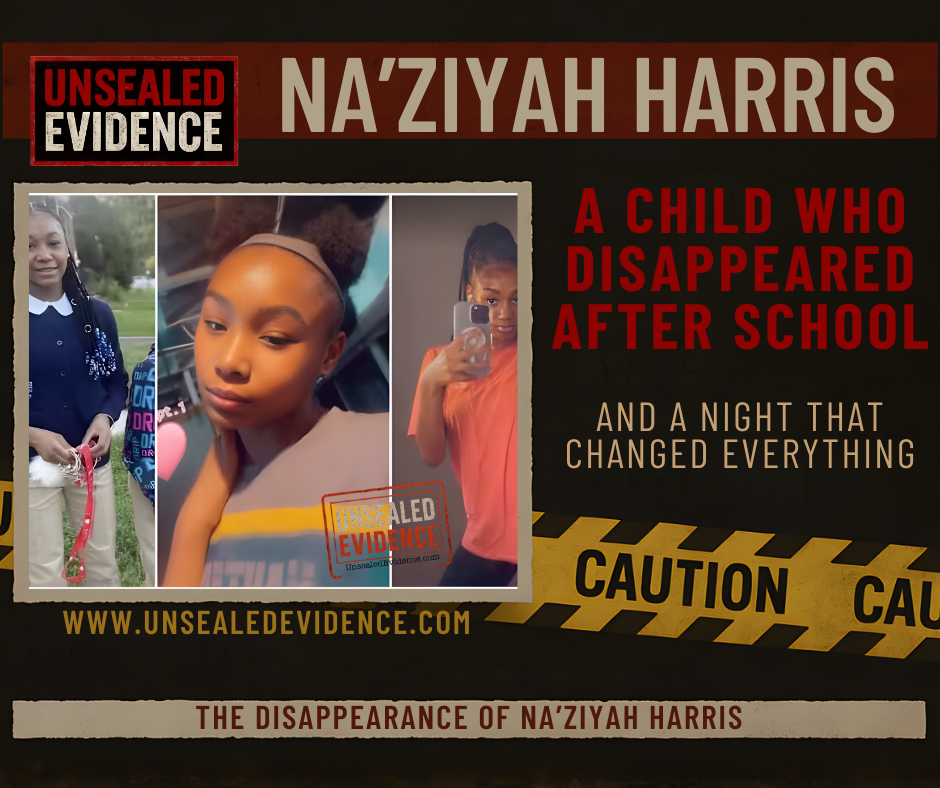
The Rugrats Coat Disappearance: The Killing of Na’Ziyah Harris Without a Body
Vanished After the Bus Stop: A Detroit Afternoon That Changed Everything On January 9, 2024, a thirteen-year-old girl stepped off her school bus on Detroit’s east side, wear

Dance Floor Deception: The Washington, Illinois Case of Robyn Polston and the Newborn at the Center of It All
The Night It Began at a School Dance In May 2023, inside a junior high school gymnasium in Washington, Illinois, colored lights reflected off polished floors as students gathered

Taken at Sears: The Abduction That Changed America Forever
Forensic and Socio-Legislative Analysis of the Adam Walsh Abduction and Its Impact on American Jurisprudence The abduction and murder of six-year-old Adam Walsh on Jul