
Vanishing of the Skelton Brothers: A Thanksgiving Mystery
A Thanksgiving Weekend Disappearance
In the small farming community of Morenci, Michigan, the long Thanksgiving weekend of 2010 should have been a chance for families to celebrate. Tanya Zuvers and her ex‑husband John Skelton were in the midst of a divorce, but they agreed that John could spend the holiday with their three sons. Andrew, Alexander and Tanner Skelton were energetic boys who enjoyed football, camping and the carefree pleasures of childhood. The boys’ relatives later recalled that they were excited to see the Thanksgiving football game and to do some after‑holiday shopping with their extended family. Tanya dropped them off at John’s house on Thursday, expecting to pick them up the next day.
What happened over the next twenty‑four hours has become one of the most haunting mysteries in southeastern Michigan. On the morning of Friday, November 26, Tanya arrived at the house to collect her children. The house was locked and eerily quiet. John was not there. He had checked himself into a hospital with a broken ankle after apparently attempting suicide by hanging from a bannister. Inside the home, officers later reported finding a scene that looked like it had been ransacked. Furniture was upended, windows and doors were damaged, and there was evidence that a struggle or a hasty departure had taken place. The boys were nowhere to be found. When questioned in the hospital, John began spinning a series of conflicting stories about their whereabouts.
Three Brothers and Their World
Andrew, Alexander and Tanner Skelton were three closely bonded brothers. Andrew, the oldest at nine, was described as thoughtful and protective of his younger siblings. He stood a little over four feet tall and weighed just under sixty pounds, with brown hair and eyes and a slightly serious expression that belied his playful nature. Seven‑year‑old Alexander was the middle child, often called “Alex” by family members. Slightly smaller than his older brother, he had brown hair and eyes and loved to play outdoors. Tanner, the youngest at five, was known for his bright smile. He was smaller than his brothers, with blond hair, blue eyes and a mischievous streak. Friends and relatives said the boys enjoyed playing together and could often be found riding bikes around their neighborhood.
The boys’ lives were unsettled in the months leading up to Thanksgiving. In September 2010, John unexpectedly removed two of his sons from their elementary school and drove them to Florida, saying he did not know when they would return. Tanya reported the incident to authorities, and the boys were brought back. The episode led her to file for divorce and to seek full custody. According to court filings, John later alleged that Tanya was an unfit mother, citing a previous misdemeanor conviction she had received years earlier. Investigators found no evidence that Tanya abused her sons, and she retained primary custody. Family members said the boys seemed unaware of the adults’ bitter legal dispute and continued to enjoy time with both parents.
Searches, Rumors and Unyielding Hope
When the boys did not reappear on the day after Thanksgiving, police issued an AMBER Alert and the search began in earnest. John told investigators that he had dropped the boys off at a friend’s house and that they would be returned soon. He then changed his story, claiming he had given them to a woman named Joann Taylor who was part of a nonprofit group that helped families. The woman, he said, drove a van and was married to a pastor. Investigators could find no record of such a person. John subsequently suggested the boys were given to an “underground group” or a religious community for their protection because he feared Tanya might harm them. None of these claims were corroborated.
A digital trail offered some clues. Cell phone records showed that John’s phone left Morenci shortly after 4:30 a.m. on November 26 and traveled into northwestern Ohio. It pinged in the area of Holiday City, Ohio, about twenty miles away, just after 5 a.m., then was shut off. The phone was turned back on around 6:45 a.m. when it was back in Morenci. Witnesses later told investigators they saw a blue Dodge Caravan like John’s on the Ohio Turnpike that morning. Search teams combed wooded areas, fields and waterways between Morenci and the Ohio border. Volunteers filled school buses provided by the local school district, and searchers used sonar equipment and cadaver dogs to scan ponds and lakes. Authorities searched John’s computer and found internet searches for neck‑breaking techniques and lethal chemicals, as well as a note telling Tanya that she would hate him when she understood what he had done.
During the frantic days following the disappearance, John was arrested and charged with several counts of kidnapping and unlawful imprisonment. In July 2011 he reached a plea agreement, pleading no contest to unlawful imprisonment while the kidnapping charges were dropped. He was sentenced to 10 to 15 years in prison. Even after his sentencing, he continued to give conflicting explanations for the boys’ disappearance. He claimed at various times that the children were with a group in Mexico, that they were living with an Amish community, or that they would come home when the time was right. No evidence ever surfaced to support those scenarios.
The years that followed were marked by occasional glimmers of hope and heartbreaking disappointments. In 2017, human remains were found in a shed in Montana, prompting speculation that the mystery had been solved. Forensic testing determined that the bones were more than a century old and unrelated to the missing brothers. In 2019, a tip led investigators to a pond in Ohio where a witness had reported seeing a man with a van on Thanksgiving morning in 2010. Crews searched the area using cadaver dogs and sonar equipment but found no trace of the boys. Age‑progression images released by the National Center for Missing and Exploited Children in 2020 showed how Andrew, Alexander and Tanner might look in their late teens. The images renewed interest in the case and brought in new tips, but none produced a breakthrough. Throughout this time, Tanya continued to speak publicly about her sons, imploring anyone with information to come forward and insisting that, despite the years, her hope persisted.
Official Findings and Legal Proceedings
Law enforcement agencies have been cautious in their public statements, but a few facts are uncontested. Investigators concluded early on that the mysterious “Joann Taylor” did not exist and that John had fabricated the story about entrusting the boys to a church group. Court records show that John researched methods of killing and wrote a note indicating he planned to take his own life after harming his sons. According to testimony at later hearings, his suicide attempt left him with a broken ankle and bruising. Officers reported finding ropes and straps in his home that could have been used to restrain or harm the boys.
John’s phone location data and vehicle sightings placed him in rural northwest Ohio during the window when the boys disappeared. That corridor, filled with farmland and wooded tracts, has been searched multiple times without success. The Michigan State Police, local law enforcement agencies and the FBI have remained involved, periodically revisiting the case as new technology becomes available. Despite exhaustive searches, no physical evidence of the boys has ever been found.
In 2020 and 2021, the Michigan Parole Board considered John for release. He declined to participate in a parole hearing in 2021 and was denied parole in subsequent years. In 2023 the board again denied release, setting his earliest possible release date for November 29, 2025. As that date approached, the boys’ family petitioned the court to have them declared legally deceased. A judge granted the petition in early 2025, declaring the brothers dead for legal purposes without making a finding about who was responsible for their deaths. Weeks later, prosecutors in Lenawee County charged John with three counts of open murder and one count of tampering with evidence. He was taken into custody and arraigned on November 17, 2025, then ordered held on a multi‑million‑dollar bond. His preliminary hearing is scheduled for mid‑2026. At the time of the charges, authorities reiterated that the case remained open and that they continued to seek information about the boys’ whereabouts.
Unresolved Mysteries
- What precisely happened to Andrew, Alexander and Tanner after they left their father’s care?
- Were they transported to another location on the morning of November 26, 2010, and if so, where?
- Did John act alone, or were other people involved in concealing the boys?
- Why has no physical evidence of the boys been located despite extensive searches?
- Could the boys still be alive, living under new identities, as John once claimed?
- What led prosecutors to file murder charges fifteen years later, and will those charges finally reveal the truth?
People at the Center of the Story
Andrew Ryan Skelton – Son – The oldest brother, nine years old at the time, with brown hair and brown eyes. Thoughtful and protective of his siblings.
Alexander William Skelton – Son – Seven‑year‑old middle child who loved outdoor play. He had brown hair and brown eyes and a quiet demeanor.
Tanner Lucas Skelton – Son – The youngest brother, five years old, known for his bright smile and playful spirit. He had blond hair and blue eyes.
John Skelton – Father – Estranged husband of Tanya and custodial parent during Thanksgiving 2010. He gave multiple conflicting accounts of the boys’ disappearance, attempted suicide and later served a prison term for unlawful imprisonment. He now faces open murder and tampering charges.
Tanya Zuvers – Mother – Mother of the boys who retained primary custody following her divorce from John. She reported her sons missing and has campaigned tirelessly for information about them.
Jeremy Brewer – Detective – A detective with the Michigan State Police who has spoken publicly about the cell phone evidence and ongoing investigation.
Extended Family and Community – Relatives, neighbors and volunteers who organized searches, raised awareness and continue to support the family in their quest for answers.
Continue Investigating

Christmas Eve Vanishing: The Camila Mendoza Olmos Story
Christmas Eve Vanishing: The Camila Mendoza Olmos Story Camila Mendoza Olmos, a 19-year-old college student in northwest Bexar County, Texas, disappeared on the morning of Wednesd

Behind the Locked Door: The Ty and Bryn Larson Custody Battle and the 54-Day Barricade
The Ty and Bryn Larson case became one of the most controversial and widely discussed family court stories in recent years after two Utah siblings barricaded themselves inside an u
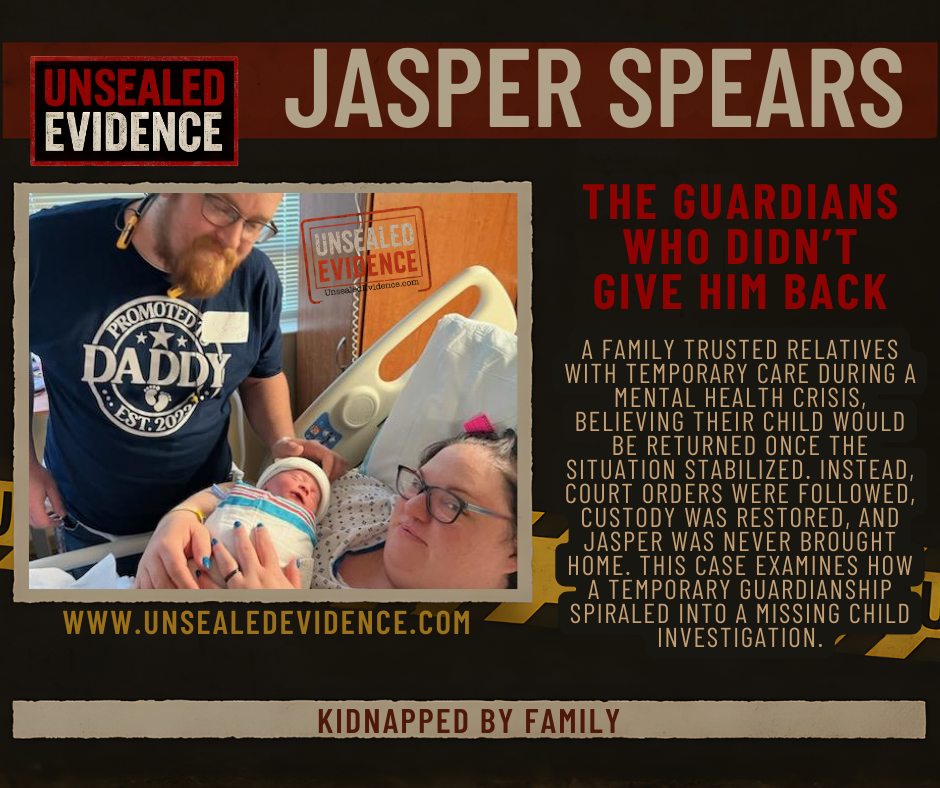
The Guardians Who Didn’t Give Him Back: Jasper Michael Spears
The Guardians Who Didn’t Give Him Back: The Disappearance of Jasper Michael Spears The Hospital Visit That Started Everything Jasper Michael Spears was born on November 6,

The Strongsville Impact: The Deaths of Dominic Russo and Davion Flanagan
In the early morning hours of July 31, 2022, a devastating crash in Strongsville left 20-year-old Dominic Russo and 19-year-old Davion Flanagan dead after a Toyota Camry driven by

The Day the Silence Broke: A Human Account of the Carly Gregg Tragedy
March 19, 2024. A Tuesday. In the quiet, unassuming town of Brandon, Mississippi, a day that began with the mundane rhythm of school and work would spiral into a vortex of horror,
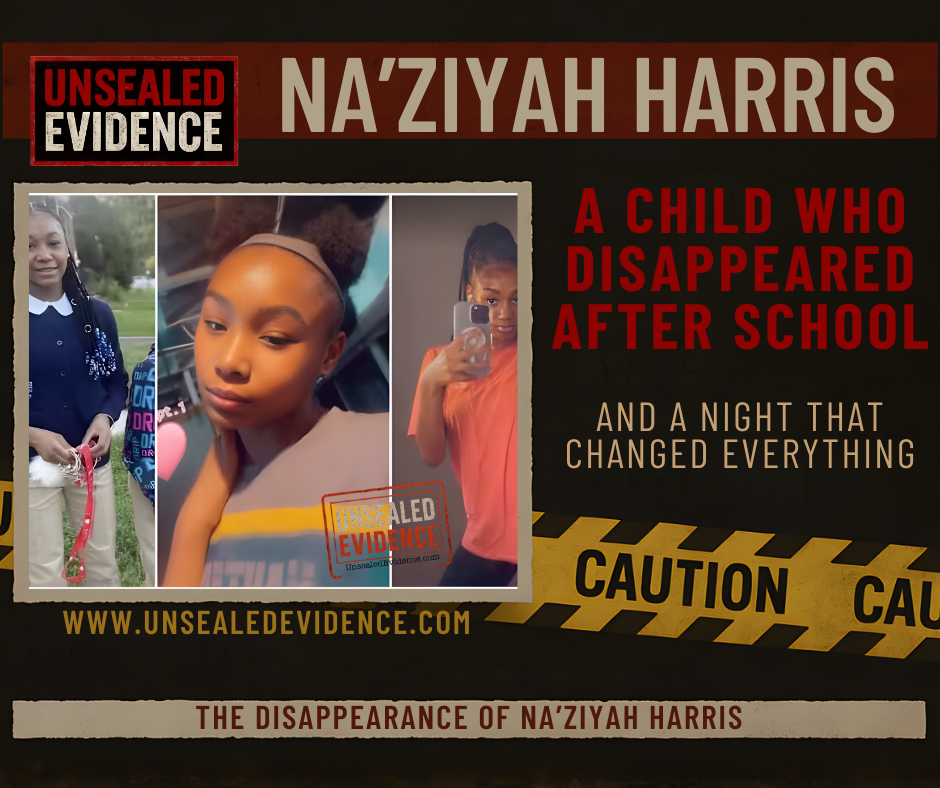
The Rugrats Coat Disappearance: The Killing of Na’Ziyah Harris Without a Body
Vanished After the Bus Stop: A Detroit Afternoon That Changed Everything On January 9, 2024, a thirteen-year-old girl stepped off her school bus on Detroit’s east side, wear

Dance Floor Deception: The Washington, Illinois Case of Robyn Polston and the Newborn at the Center of It All
The Night It Began at a School Dance In May 2023, inside a junior high school gymnasium in Washington, Illinois, colored lights reflected off polished floors as students gathered

Taken at Sears: The Abduction That Changed America Forever
Forensic and Socio-Legislative Analysis of the Adam Walsh Abduction and Its Impact on American Jurisprudence The abduction and murder of six-year-old Adam Walsh on Jul