Hidden Identity: The Long Flight of Margo Freshwater
In the mid‑1960s a young woman from Ohio became entangled in a crime spree that spiraled out of control. Born in Columbus and raised in a working‑class family, Margo Freshwater was described by classmates as a tomboy and a fast runner who excelled at swimming and track. Her teenage years were turbulent. She left high school early, became pregnant and attempted suicide amid the shame and stress of her circumstances. When the father of her baby reacted coldly to the pregnancy, she gave the newborn up for adoption. Seeking stability she fell in with older men, including a felon named Al Schlereth. When he was jailed in Memphis, she set out on a fifteen‑hour bus ride in late 1966 to help him. She hired attorney Glenn Nash to represent him, beginning a relationship that would change her life.
Freshwater, then eighteen, found herself drawn into Nash’s world. Nash was a karate instructor and lawyer whose practice was crumbling under misconduct investigations. According to later testimony, he drank heavily and was becoming paranoid. Freshwater had nowhere to stay, so Nash arranged lodging for her and the two soon began an affair. Nash told acquaintances that the Memphis bar association was out to get him. In early December 1966 he claimed that agents were following him and that money would solve their problems. On December 6 he and Freshwater drove to the Square Deal Liquor store in Memphis. Freshwater waited on a customer while Nash led the clerk, Hillman Robbins, to a back room. The man was tied up and shot repeatedly with two different pistols. Witnesses later said a teenage girl and an older man fled the store in a white Ford. Police found bullet casings and rope in Nash’s abandoned car, linking him to the murder. Twelve days later a clerk in a Florida convenience store was found shot in the neck; witnesses again described a couple matching Nash and Freshwater. Soon after, cab driver C.C. Surrett was shot to death after picking up a man and a teenage girl. Authorities from three states issued alerts, and the pair were arrested at a bus station in Hernando, Mississippi. Nash was ruled mentally incompetent and committed to hospitals, while Freshwater was tried for the liquor store killing. She insisted that she acted under duress, claiming Nash threatened to kill her and her family. Juries were unable to reach verdicts in two trials, but a third jury found her guilty in 1969. She received a ninety‑nine‑year prison term.
By October 1970 Freshwater had spent about eighteen months in the Tennessee Prison for Women. She had remained a model inmate but was desperate to regain her freedom. On October 4, while being escorted across a prison yard with other inmates and a single unarmed guard, Freshwater and another prisoner broke away. They ran toward a ten‑foot fence topped with barbed wire. The guard chose to stay with the larger group and called for help. Freshwater scaled the fence with the athletic ability she had honed on high‑school tracks. The two women hitched a ride with a passing trucker and disappeared. Freshwater’s accomplice was later arrested in Chicago. Freshwater herself faded from view after a brief sighting in Baltimore. Some believed she had died. In 1984 a court declared her legally dead at her family’s request so her mother could receive Social Security benefits. For more than three decades she lived quietly under a succession of names, including Tonya Hudkins and, later, Tonya McCartor. She married twice, raised four children and worked as an insurance clerk and later as a truck driver alongside her second husband. She took ballroom dancing lessons and reportedly returned to Tennessee as a tourist without being recognized. Friends and neighbors knew her as a devoted mother and community member with a heart condition. They never suspected a violent past.
The long‑dormant case stirred again in the early 2000s when investigators revisited old leads. Agents from the Tennessee Bureau of Investigation and the Ohio Bureau of Investigation searched databases for women named Tonya with the same birth date as Margo Freshwater. They compared Ohio driver’s‑license photographs with mug shots from the 1960s and noted striking similarities. Acting on a tip, a team of plain‑clothes officers staked out an athletic club in Columbus on May 19, 2002. They watched a 53‑year‑old grandmother leave the club with her family and approached her in the parking lot. When officers told her they believed she was Margo Freshwater, she showed no emotion. She hugged her son and told him everything would be fine. Fingerprints taken at the scene matched those from the old murder case. Freshwater was extradited to Tennessee to serve her sentence. Her family was stunned; her second husband, Daryl McCartor, initially believed police had the wrong person. Her children said they had never heard of the crimes.
Back in prison Freshwater petitioned for a new trial, arguing that prosecutors had withheld crucial evidence. A fellow inmate of Nash, Johnny Box, had written a four‑page letter in 1966 claiming Nash confessed that he alone shot the liquor store clerk. At her trial only one page of that letter was disclosed. In 2011 the Tennessee Court of Appeals ruled that jurors might have viewed the case differently if they had known of Nash’s confession, and it ordered a new trial. Facing the possibility of another lengthy court battle, Freshwater entered a so‑called best‑interest guilty plea in October 2011. The plea allowed her to maintain her claim of innocence while acknowledging that prosecutors had enough evidence to convict. She was sentenced to twenty‑five years, received credit for time served before and after her escape and was released from custody on November 1, 2011. By her attorney’s count she had spent roughly twelve and a half years behind bars in total. Freshwater expressed gratitude to be reunited with her children and grandchildren. She declined media interviews, saying she wanted to focus on her family.
Though she admitted no direct involvement in the killings, the state still regards Freshwater as responsible for the deaths. The families of the victims see the case as an example of justice delayed; some relatives believe she should have remained in prison for life. Supporters say she was a vulnerable teenager manipulated by an older man with untreated mental illness. Freshwater has largely stayed out of the public eye since her release, and little is known about her current life beyond reports that she returned to Ohio. The shadow of her past, however, continues to hover over discussions of fairness, coercion and rehabilitation.
The Lives Lost
Three people lost their lives during the brief crime spree linked to Margo Freshwater and Glenn Nash. Hillman Robbins was an elderly liquor store clerk described by his family as gentle and attentive. On December 6, 1966 he was working alone at a Memphis shop when he was tied up and shot five times. His murder devastated his children and grandchildren; relatives later said his son struggled for years with the trauma of identifying the body. Less than two weeks later, a shop assistant named Esther Boyea was killed in a Florida convenience store in similar fashion. Witnesses said a man and a teenage girl fled the scene. The couple’s final known victim was C.C. Surrett, a taxi driver who was shot shortly after picking up a fare. Surrett was a hardworking father whose death left his family without its primary breadwinner. None of the victims had any connection to their killers. For decades their families had little closure, as one suspect was declared insane and the other vanished. The eventual arrest of Freshwater in 2002 gave some relatives a sense that justice might finally be served, though opinions remain divided on whether her punishment was adequate.
Tracing the Investigation
The crime spree spanned Tennessee, Florida and Mississippi, complicating the investigation from the start. In Memphis, detectives found a .22‑calibre pistol, rope and bullet casings in Nash’s abandoned car. Witness accounts of a young woman driving a getaway vehicle and waiting on customers helped narrow the search. After the arrests in Mississippi, Nash was sent to mental hospitals and Freshwater was tried in Tennessee. When she escaped in 1970, law enforcement agencies coordinated a multistate manhunt. Posters with her youthful face circulated for years. Investigators received sporadic tips but none panned out. Her disappearance was so complete that, in 1984, authorities consented to declare her legally dead.
By the late 1990s advances in computer databases allowed investigators to cross‑reference aliases. Tennessee agents ran lists of women born on November 4, 1948, Freshwater’s birthday, who were living under different names. The break came when they discovered a woman named Tonya Hudkins in Ohio with the same birth date and similar height and weight. Comparing her driver’s‑license photo to the old mug shot, agents noted that the features matched despite the passage of decades. Surveillance of her life showed a stable, law‑abiding existence, but investigators persisted. The 2002 arrest hinged on obtaining fingerprints; once the prints matched, there was no legal doubt about her identity. Freshwater’s return to prison generated public debate. In 2011 the Court of Appeals scrutinized the handling of evidence and concluded that prosecutors had withheld a jailhouse confession by Nash. This ruling opened the door to a plea agreement that ultimately ended the case.
Official Findings and Evidence
- Courts ruled that Freshwater and Nash committed armed robberies across Tennessee, Florida and Mississippi in December 1966, and that three people were killed during those crimes. Nash was found incompetent to stand trial and confined to mental hospitals; Freshwater was convicted and sentenced to ninety‑nine years.
- Prison records confirm that Freshwater escaped from the Tennessee Prison for Women on October 4, 1970 alongside another inmate. Law enforcement agencies issued national bulletins, but she evaded capture for 32 years.
- Investigators later acknowledged that they never closed the case. Agents searched records under her birth date and tracked down alias Tonya Hudkins, leading to her arrest on May 19, 2002. Fingerprint comparisons matched the prints from her 1960s arrest.
- Court filings show that a jailhouse informant, Johnny Box, wrote a letter stating Nash confessed to shooting the liquor store clerk. Only a portion of this letter was disclosed at trial. The Tennessee Court of Appeals ruled in 2011 that withholding the rest of the statement warranted a new trial.
- Freshwater entered a best‑interest guilty plea in October 2011, accepting a sentence of twenty‑five years. With credit for time served, she was released from custody on November 1, 2011.
Lingering Mysteries
- How much agency did Freshwater have during the crimes? She claimed Nash threatened her life; prosecutors argued she willingly participated. The truth remains contested.
- Were there additional victims or crimes committed during the couple’s flight that have never been connected to them?
- Why was the full jailhouse confession withheld for decades? Did prosecutorial misconduct influence the original conviction?
- After thirty‑two years of freedom, had Freshwater truly rehabilitated? Should her law‑abiding life on the run mitigate her original sentence?
- What became of Glenn Nash after his release from mental institutions in 1983? Records suggest he lived quietly in Arkansas, but little else is known.
- How do the families of the victims view the plea deal and Freshwater’s release? Their voices have seldom been heard publicly.
Players and Connections
- Margo Freshwater – Central figure – An Ohio woman convicted of murder in 1969, she escaped prison in 1970 and lived under aliases until her arrest in 2002; she maintains that she never killed anyone and was coerced by Glenn Nash.
- Glenn Nash – Attorney and accomplice – A Memphis lawyer twenty years older than Freshwater who began an affair with her while representing her boyfriend; he was deemed mentally incompetent and confined to hospitals; Freshwater alleges he masterminded the robberies and murders.
- Hillman Robbins – Victim – A liquor store clerk in Memphis tied up and shot on December 6, 1966 during the first robbery; his murder led to Freshwater’s conviction.
- Esther Boyea – Victim – A Florida convenience‑store worker shot in the neck twelve days after the Memphis robbery; witnesses linked a young woman and an older man to the scene.
- C.C. Surrett – Victim – A taxi driver murdered shortly after picking up two passengers matching the descriptions of Freshwater and Nash; he left behind a family who depended on his income.
- Al Schlereth – Freshwater’s former boyfriend – An Ohio felon whose imprisonment in Memphis prompted Freshwater to travel south; his arrest introduced her to Glenn Nash.
- Johnny Box – Jailhouse informant – An inmate who claimed Nash confessed to the liquor store murder; his four‑page letter, partly withheld at trial, became the basis for Freshwater’s later appeal.
- Daryl McCartor – Freshwater’s second husband – An Ohio truck driver who married Freshwater when she was living under the name Tonya McCartor; he believed in her innocence and stood by her after her arrest.
- Greg Elliott – Investigator – A Tennessee Bureau of Investigation agent whose database searches and comparison of driver’s‑license photos led to Freshwater’s capture in 2002.
- Tim Hudkins – Freshwater’s son – One of the children she raised while living under an alias; he expressed disbelief at her arrest but continued to support her.
Continue Investigating

Christmas Eve Vanishing: The Camila Mendoza Olmos Story
Christmas Eve Vanishing: The Camila Mendoza Olmos Story Camila Mendoza Olmos, a 19-year-old college student in northwest Bexar County, Texas, disappeared on the morning of Wednesd
Behind the Locked Door: The Ty and Bryn Larson Custody Battle and the 54-Day Barricade
The Ty and Bryn Larson case became one of the most controversial and widely discussed family court stories in recent years after two Utah siblings barricaded themselves inside an u
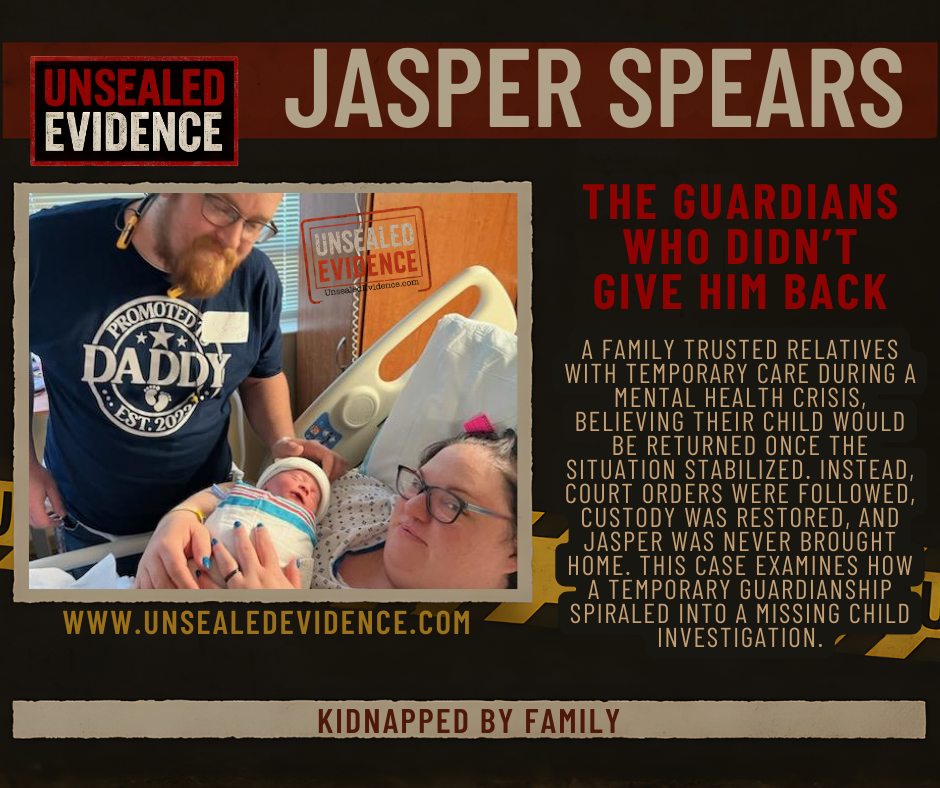
The Guardians Who Didn’t Give Him Back: Jasper Michael Spears
The Guardians Who Didn’t Give Him Back: The Disappearance of Jasper Michael Spears The Hospital Visit That Started Everything Jasper Michael Spears was born on November 6,

The Strongsville Impact: The Deaths of Dominic Russo and Davion Flanagan
In the early morning hours of July 31, 2022, a devastating crash in Strongsville left 20-year-old Dominic Russo and 19-year-old Davion Flanagan dead after a Toyota Camry driven by
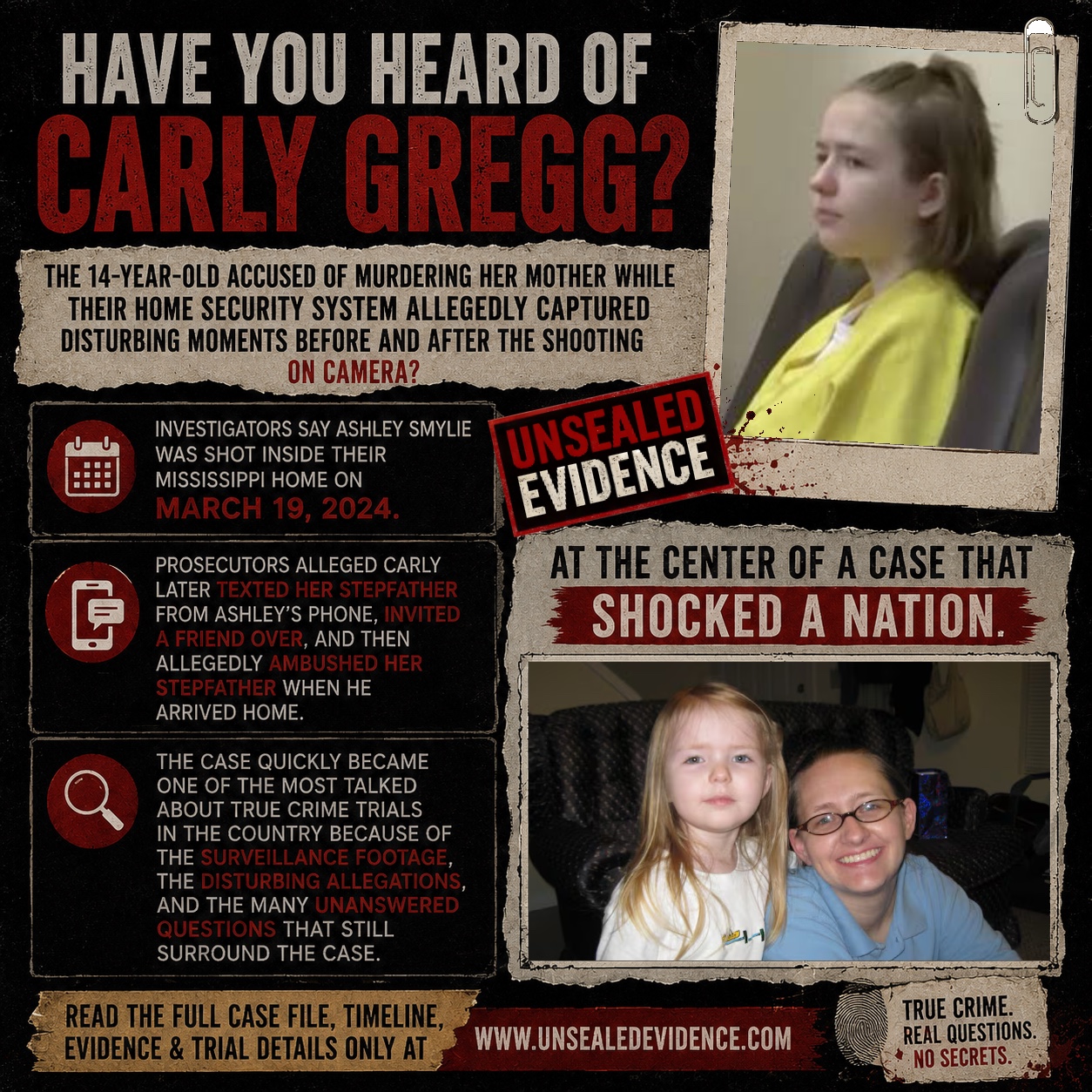
The Day the Silence Broke: A Human Account of the Carly Gregg Tragedy
March 19, 2024. A Tuesday. In the quiet, unassuming town of Brandon, Mississippi, a day that began with the mundane rhythm of school and work would spiral into a vortex of horror,
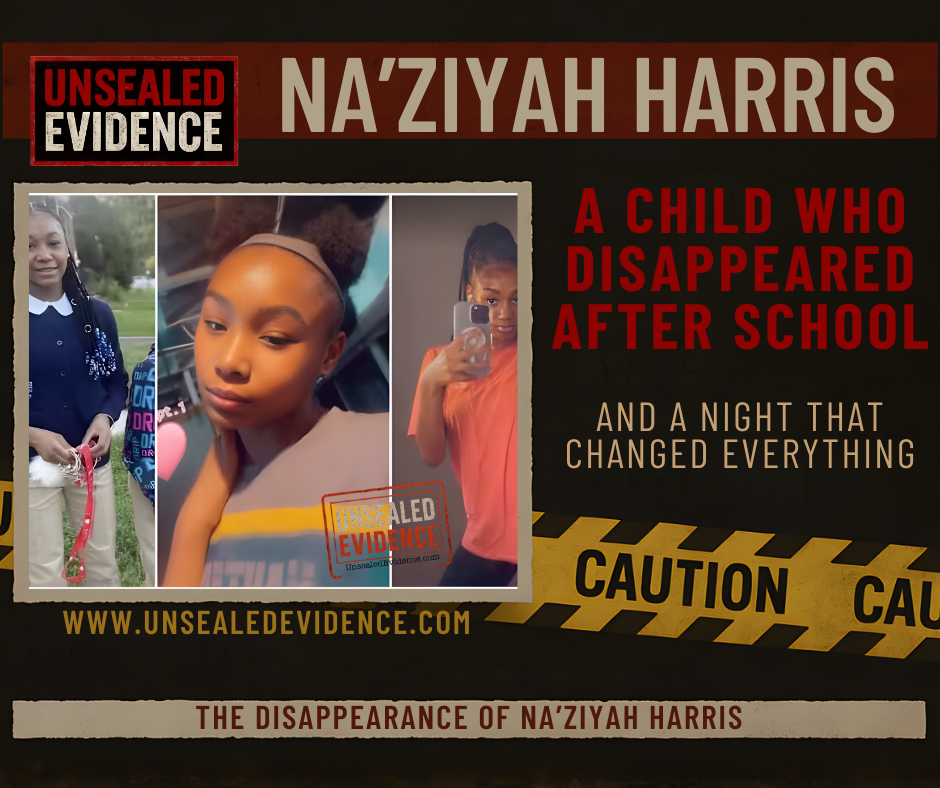
The Rugrats Coat Disappearance: The Killing of Na’Ziyah Harris Without a Body
Vanished After the Bus Stop: A Detroit Afternoon That Changed Everything On January 9, 2024, a thirteen-year-old girl stepped off her school bus on Detroit’s east side, wear
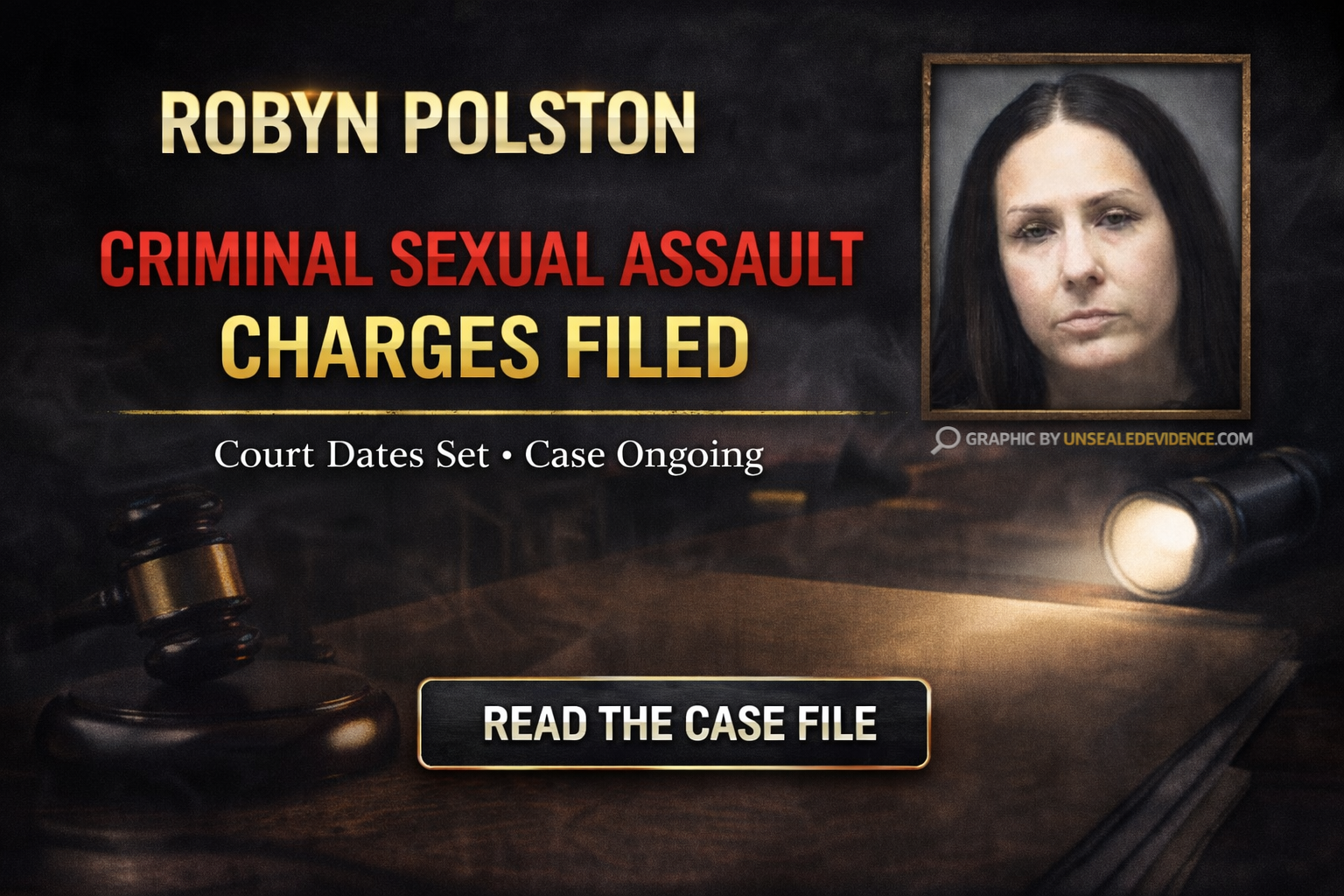
Dance Floor Deception: The Washington, Illinois Case of Robyn Polston and the Newborn at the Center of It All
The Night It Began at a School Dance In May 2023, inside a junior high school gymnasium in Washington, Illinois, colored lights reflected off polished floors as students gathered
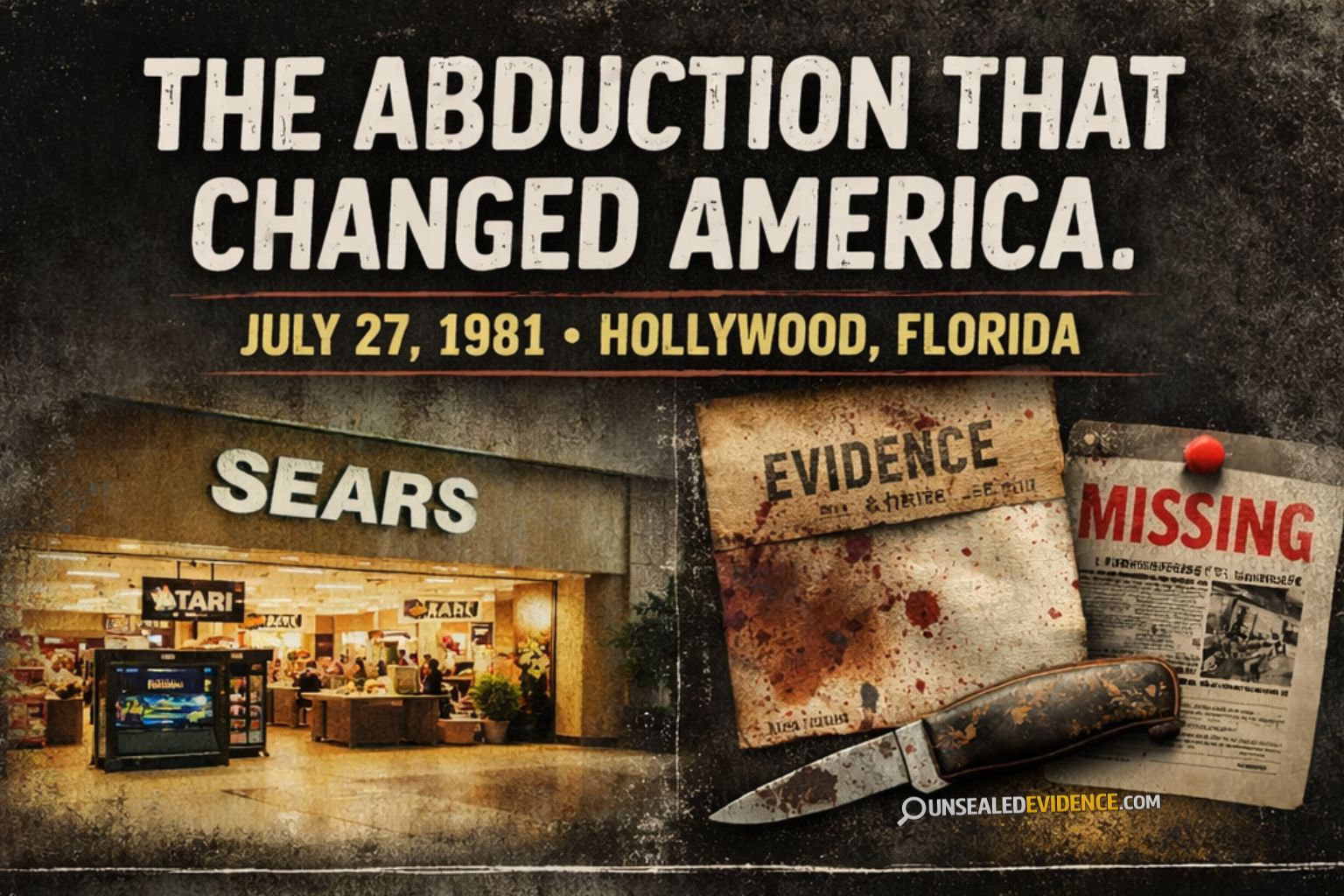
Taken at Sears: The Abduction That Changed America Forever
Forensic and Socio-Legislative Analysis of the Adam Walsh Abduction and Its Impact on American Jurisprudence The abduction and murder of six-year-old Adam Walsh on Jul