
The Jeep That Never Came Back
August 17, 2000: A Routine Drive That Broke Time
On August 17, 2000, Bill Rundle and Traci Kenley left together in Bill’s Jeep for what should have been a normal drive across rural Nebraska. The plan sounded simple: a short trip from the area near Edgar, Nebraska, heading toward Hastings, Nebraska — a drive locals wouldn’t think twice about. It was the kind of drive made on habit, on routine, on the assumption you’ll be home later.
But later never came.
That night, the usual signs of life didn’t happen. Calls went unanswered. Time passed. Plans were missed. The kind of “maybe they’re just busy” worry slowly turned into a sharper fear — because people don’t typically vanish mid-drive without leaving some trace.
As the hours became days, then weeks, the case shifted into what families dread most: a disappearance with no clear starting point. No confirmed location where something went wrong. No witness placing them at a specific moment after they left. Just two people last known to be traveling — and then nothing.
Investigators initially worked the case as a missing-persons situation. Attention centered on where Bill and Traci were last seen, where they were headed, and who knew about their plans that day. The area between Edgar and Hastings includes long stretches of open road, farmland, and water hazards — places where a vehicle can leave the roadway without being immediately noticed. In a landscape like that, a single wrong turn or unexpected event can disappear into the environment itself.
For nearly two years, Bill Rundle and Traci Kenley remained missing.
Two Years Later, the Ground Gave Them Back
In early August 2002, a change in conditions near Glenvil, Nebraska altered the course of the case. Low water levels in a drainage pit on a feedlot reportedly revealed something that did not belong — the outline of a vehicle partially concealed by water and terrain.
Once recovered, the vehicle was identified as Bill Rundle’s Jeep.
Inside were human remains.
Investigators later confirmed that the remains belonged to Bill Rundle and Traci Kenley. The missing-persons case was officially resolved — but emotionally, the case fractured instead of closing. Because while the discovery explained where they were, it did not fully explain how they got there, or why the Jeep had gone unnoticed for so long.
From that moment on, the story split into two competing understandings.
One interpretation framed the incident as a tragic accident — a vehicle leaving the roadway and entering water in a place that simply escaped detection. The other interpretation focused on reported details surrounding the Jeep’s condition when it was recovered: the positioning of certain controls, the status of the lights, and the state of the windows. To some, those details raised doubts about whether the scene reflected a straightforward accident.
That tension — between official conclusions and lingering unease — became the heart of the case.
Who Bill and Traci Were Before They Disappeared
Traci Kenley was 28 years old in the summer of 2000. People who knew her described her as responsible and grounded, someone who maintained regular contact with those close to her. She had routines, relationships, and obligations — the kind of life where silence is immediately noticeable. When she didn’t return or reach out, it was not brushed off as normal behavior.
Bill Rundle was 25 years old and known for living a steady, working-class routine. He was not someone who drifted away without explanation. Like Traci, Bill’s absence was immediately out of character. The disappearance felt abrupt, not chosen.
What mattered most was not just that they were missing — it was how they were missing. They left together, mid-day, for a known drive. They did not abandon vehicles, possessions, or identities. Everything pointed to an interruption, not a decision to disappear.
Their lives did not stop because they wanted them to. They stopped because something happened on that drive.
The Long Middle: Searching Without a Location
During the nearly two-year period when Bill and Traci were missing, investigators faced the kind of challenge unique to rural cases. Roads stretch on. Fields change with the seasons. Water levels rise and fall. A vehicle can rest just out of sight, missed again and again not because no one cared — but because the land itself hides things well.
Search efforts focused on last known movements, possible alternate routes, and people who may have interacted with them that day. As time passed, the lack of a confirmed location made every theory difficult to prove or disprove. Each unanswered question layered itself on top of the last.
When the Jeep was finally recovered in 2002, it anchored the case to a physical place — but it also shifted the focus entirely. Now the question was no longer “Where are they?” but “What exactly happened here?”
The condition of the Jeep became a focal point for speculation and grief alike. For some, the explanation felt sufficient. For others, it felt incomplete. Families were left grappling not just with loss, but with disagreement over meaning — and disagreement over whether the truth had fully surfaced.
What Authorities Have Stated Publicly
Authorities have publicly confirmed that Bill Rundle and Traci Kenley were reported missing after August 17, 2000, when they were last known to be traveling together in Bill’s Jeep.
They have confirmed that the Jeep was recovered in early August 2002 from a drainage pit or feedlot area near Glenvil, Nebraska, and that the remains inside were identified as Bill and Traci.
Investigators publicly indicated that available evidence supported a vehicle-related incident and that foul play was not officially established based on what was known at the time. At the same time, it has been acknowledged through the years that questions and disputes about the circumstances never fully disappeared — particularly among those who believed certain details did not align cleanly.
The Questions That Refuse to Settle
What exact route did Bill and Traci take after leaving on August 17, 2000, and where did the timeline fracture?
Who was the last confirmed person, outside of each other, to see or speak with them that day?
How did the Jeep remain undiscovered for nearly two years in a working agricultural area?
Do the reported vehicle conditions reflect a typical accident, or do they suggest actions taken before the Jeep entered the water?
Was a mechanical issue, distraction, or medical emergency ever conclusively ruled out?
Could modern forensic review provide clarity that was not possible in 2002?
The People Whose Lives Intersected That Day
Bill Rundle - Victim - A 25-year-old man last known traveling with Traci Kenley on August 17, 2000, in his Jeep; later found deceased when the vehicle was recovered in August 2002.
Traci Kenley - Victim - A 28-year-old woman last known traveling with Bill Rundle on August 17, 2000; later found deceased when the vehicle was recovered.
Doug Wolfe - Reported relationship connection - Publicly referenced as Traci Kenley’s boyfriend at the time; connected to discussions surrounding plans and relationships prior to the disappearance.
Traci Kenley’s Family - Family - Publicly associated with ongoing grief and unresolved questions following the recovery.
Bill Rundle’s Family - Family - Publicly connected to the aftermath and disputes regarding how the deaths occurred.
Investigators and responding agencies - Official role - Responsible for the missing-persons investigation, recovery operation, identification process, and public conclusions.
Continue Investigating

Christmas Eve Vanishing: The Camila Mendoza Olmos Story
Christmas Eve Vanishing: The Camila Mendoza Olmos Story Camila Mendoza Olmos, a 19-year-old college student in northwest Bexar County, Texas, disappeared on the morning of Wednesd
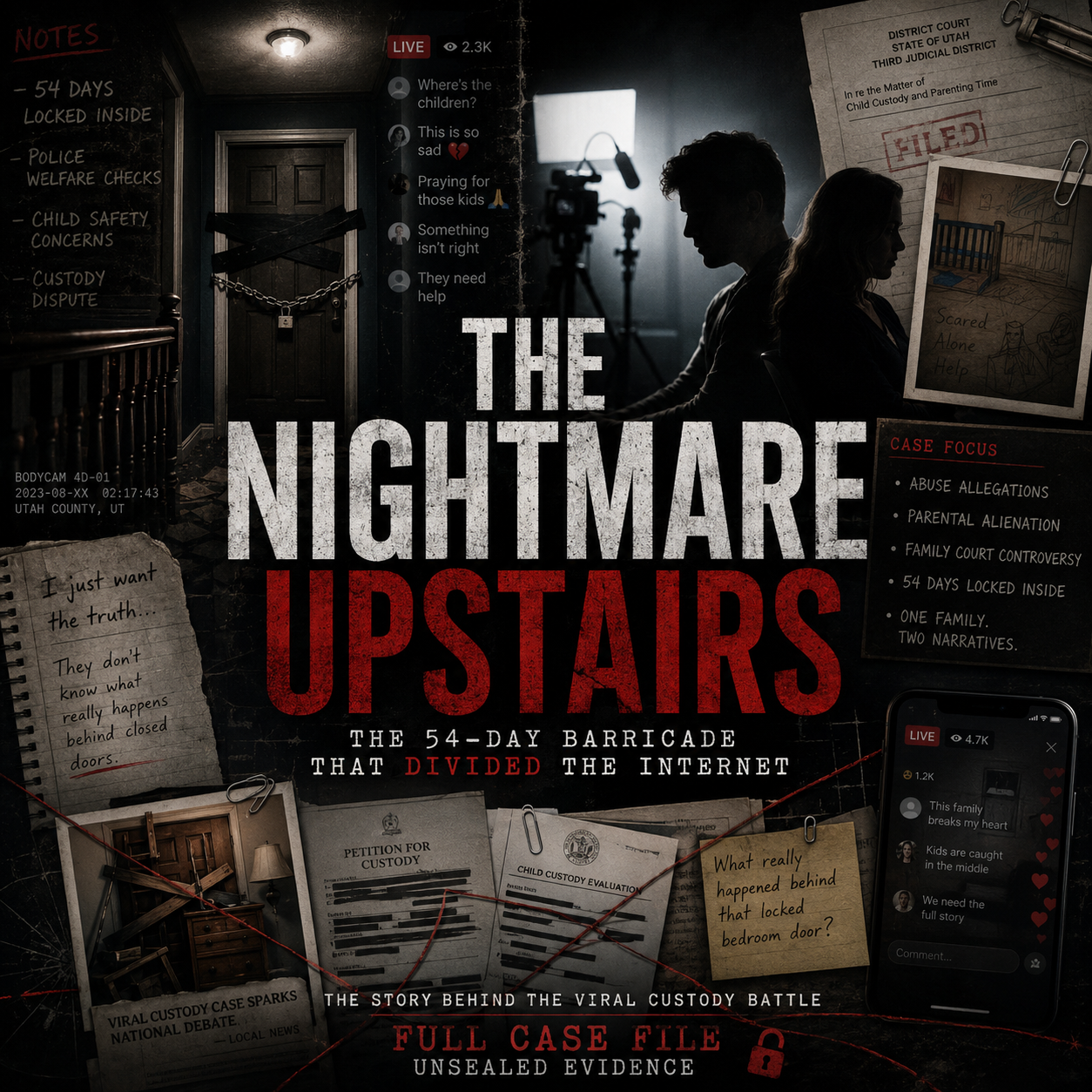
Behind the Locked Door: The Ty and Bryn Larson Custody Battle and the 54-Day Barricade
The Ty and Bryn Larson case became one of the most controversial and widely discussed family court stories in recent years after two Utah siblings barricaded themselves inside an u
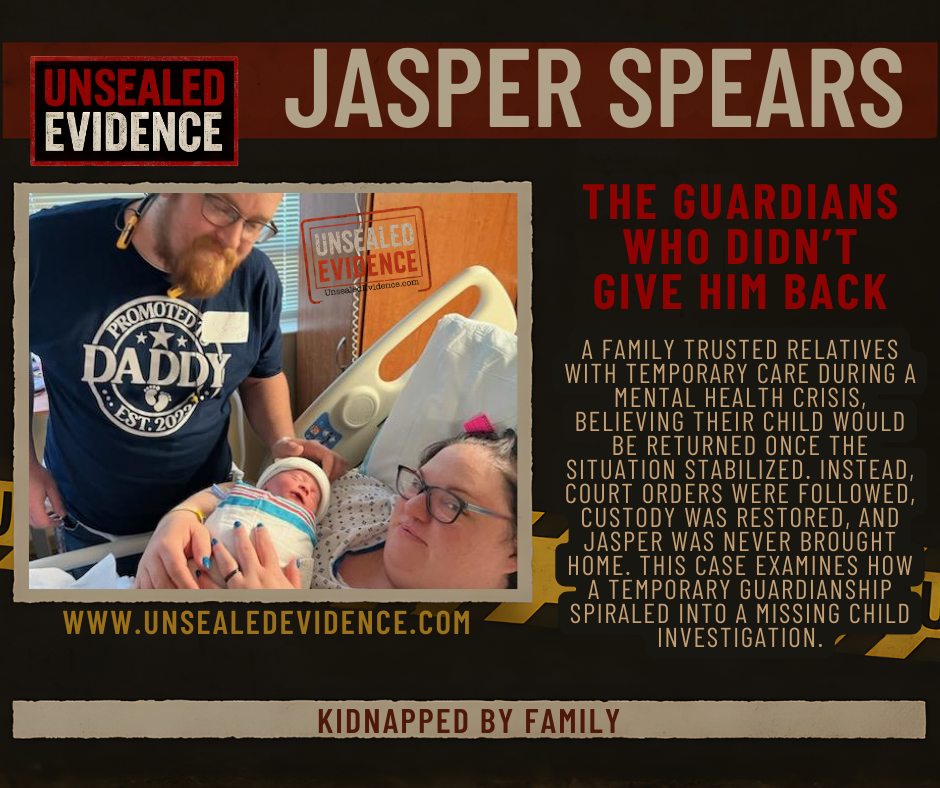
The Guardians Who Didn’t Give Him Back: Jasper Michael Spears
The Guardians Who Didn’t Give Him Back: The Disappearance of Jasper Michael Spears The Hospital Visit That Started Everything Jasper Michael Spears was born on November 6,

The Strongsville Impact: The Deaths of Dominic Russo and Davion Flanagan
In the early morning hours of July 31, 2022, a devastating crash in Strongsville left 20-year-old Dominic Russo and 19-year-old Davion Flanagan dead after a Toyota Camry driven by
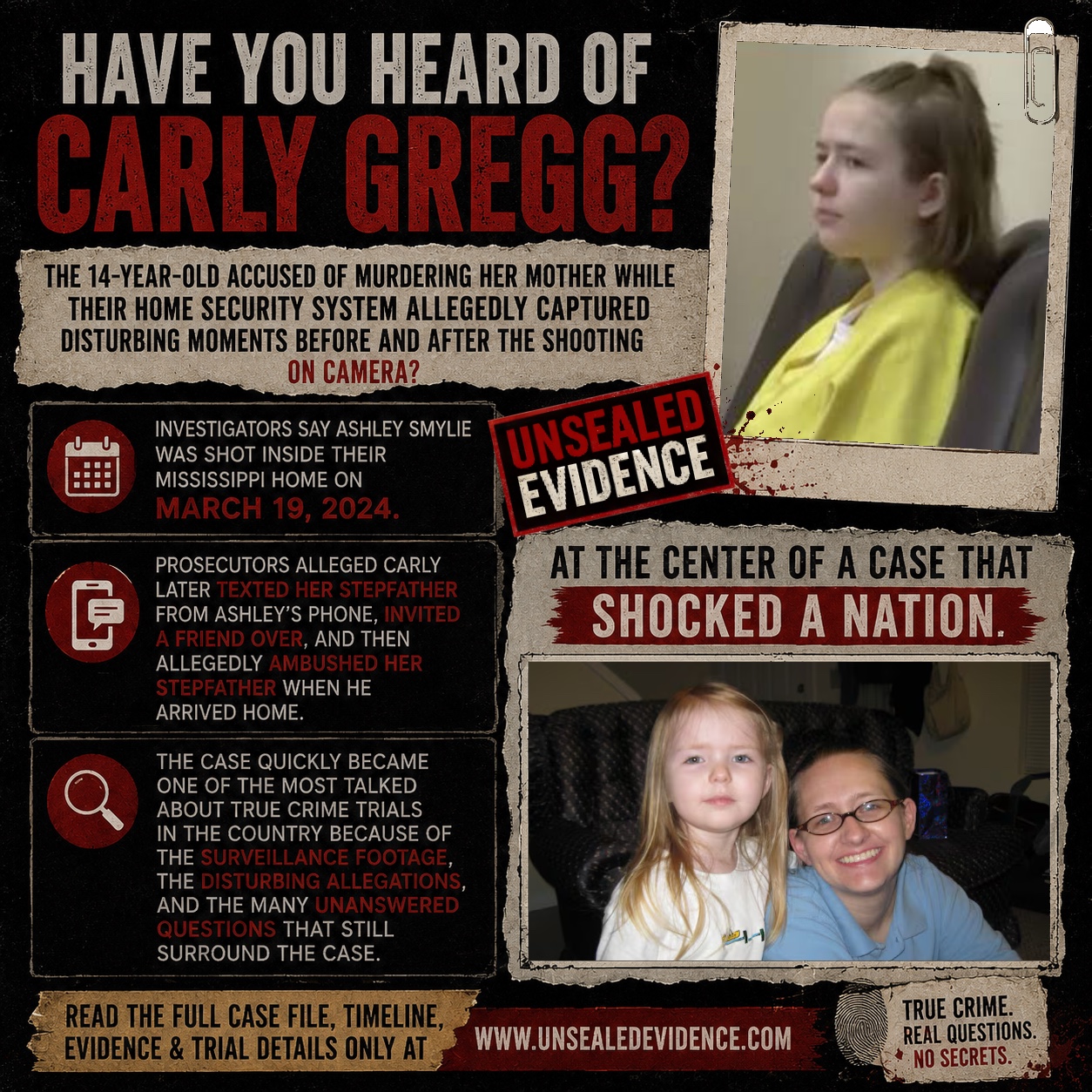
The Day the Silence Broke: A Human Account of the Carly Gregg Tragedy
March 19, 2024. A Tuesday. In the quiet, unassuming town of Brandon, Mississippi, a day that began with the mundane rhythm of school and work would spiral into a vortex of horror,
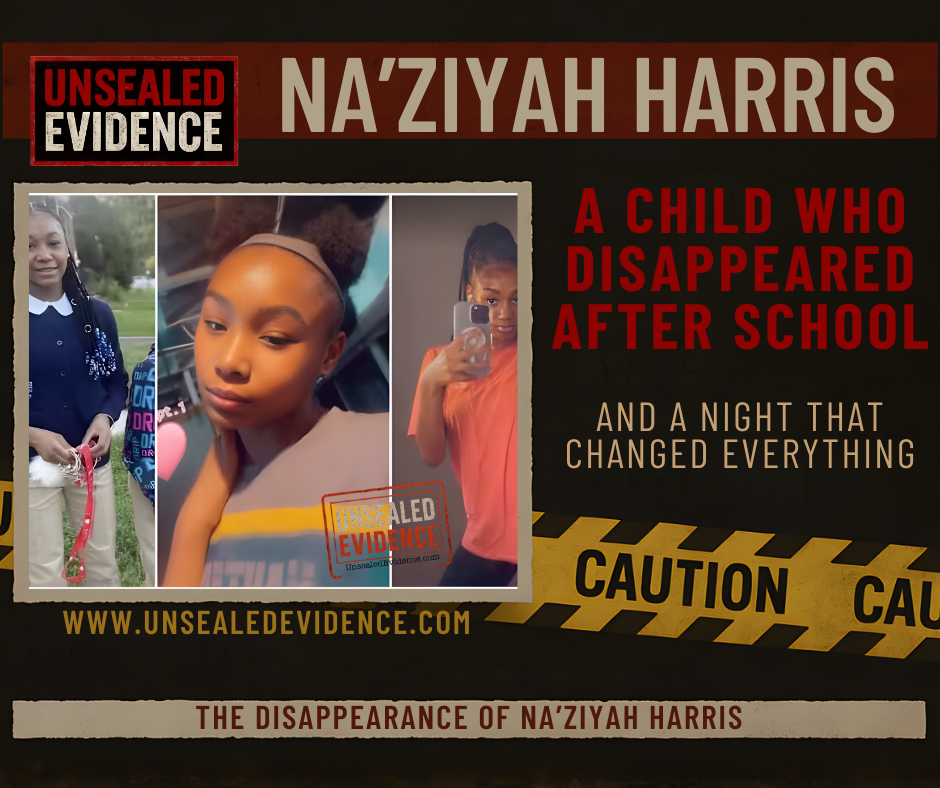
The Rugrats Coat Disappearance: The Killing of Na’Ziyah Harris Without a Body
Vanished After the Bus Stop: A Detroit Afternoon That Changed Everything On January 9, 2024, a thirteen-year-old girl stepped off her school bus on Detroit’s east side, wear
Dance Floor Deception: The Washington, Illinois Case of Robyn Polston and the Newborn at the Center of It All
The Night It Began at a School Dance In May 2023, inside a junior high school gymnasium in Washington, Illinois, colored lights reflected off polished floors as students gathered
Taken at Sears: The Abduction That Changed America Forever
Forensic and Socio-Legislative Analysis of the Adam Walsh Abduction and Its Impact on American Jurisprudence The abduction and murder of six-year-old Adam Walsh on Jul