The Crime in Full: What Happened to Vera Jo Reigle
Vera Jo Reigle’s murder was not a sudden act of rage. It was the final step in a long pattern of abuse, manipulation, and control that spanned years — and it unfolded in full view of other adults, authorities, and systems that should have protected her.
Vera was a vulnerable young woman with an intellectual disability who spent much of her life searching for stability and belonging. After surviving sexual abuse by her father as a child, she was left emotionally fractured and deeply trusting of anyone who offered her the promise of family. That need led her into the Brooks household in Findlay, Ohio — a place that would ultimately become the setting for her torture and death.
The Brooks home was chaotic, overcrowded, and unstable. Drugs were used and sold. Violence was common. People moved in and out freely. Animals roamed the house. And at the center of it all was Cheri Brooks, a domineering matriarch who exerted absolute control over everyone under her roof.
Vera was treated less like a person and more like property.
Over time, she was isolated from the outside world, financially controlled, physically abused, and emotionally terrorized. She was told where she could go, who she could talk to, and what she was allowed to do. When she became pregnant, the control intensified.
Cheri Brooks wanted Vera’s baby — especially if it was a girl. Vera was reportedly told that if she gave birth to a daughter, the baby would belong to Cheri. When Vera went into labor prematurely after being forced to consume excessive castor oil, that control became reality. Once her daughter was born, Vera was increasingly pushed aside while Cheri presented the child as her own.
As Vera’s value to the household diminished, her treatment worsened.
By 2011, she had become a target. Stories were spread inside the home portraying Vera as dangerous, manipulative, and responsible for tragedies she did not cause. These lies helped justify escalating violence against her — and laid the groundwork for her murder.
The Pattern Before the Killing: Abuse, Control, and Isolation
Vera’s abuse was not hidden. Police were called to the Brooks home repeatedly. Officers saw her injuries. Social services were aware of concerns involving both Vera and her child. Yet time and again, intervention stopped short.
Vera often insisted she was “fine” and wanted to stay — a response that is painfully common in cases involving coercive control, trauma bonding, and intellectual disability. She did not have the tools to recognize her situation as dangerous, nor the support system to safely leave.
Inside the home, violence became routine.
She was beaten for minor “infractions.” She was blamed for things she didn’t do. She was humiliated and degraded. On at least one occasion, she was hospitalized after a severe beating and still refused to cooperate with prosecution.
Those around her learned that hurting Vera came without consequences.
When Daniel Bixler and Nicole Peters entered the picture, the violence escalated even further. They were already fleeing their own criminal charges and quickly assimilated into the environment of cruelty within the Brooks household. Witness accounts later revealed that tormenting Vera became almost recreational.
By the time the decision was made to kill her, Vera had already been stripped of her humanity in the eyes of those around her.
Law Enforcement Theory: The Night Vera Was Taken
Investigators concluded that Vera’s murder was premeditated and organized — not spontaneous.
The narrative that emerged showed a calculated effort to remove Vera permanently, ensuring that she could never reclaim her daughter or expose the abuse inside the Brooks home.
On the night of March 26, 2011, Vera was lured away under the guise of a walk. She hesitated. She appeared uneasy. But she trusted the people around her — the same people who had spent years convincing her she had nowhere else to go.
Once isolated near the railroad tracks, the violence became extreme.
She was beaten.
She was stabbed.
When her clothing prevented the blade from penetrating deeply enough, she was forced to remove it.
When the attack still wasn’t over, her throat was slit.
Her body was then placed across the railroad tracks in what investigators believe was an attempt to destroy evidence and make her death appear accidental.
Evidence suggests that Vera may have still been alive when placed there — that she managed to pull herself between the rails in a final attempt to survive.
She died alone in the dark.
What Still Doesn’t Sit Right: The Questions That Won’t Go Away
Despite convictions, this case leaves behind disturbing gaps that continue to demand attention.
Why were so many warning signs dismissed?
How many people knew what was happening inside that home?
Who encouraged the escalation from abuse to murder?
Why was the system willing to accept Vera’s assurances without accounting for her disability and trauma history?
And perhaps most haunting of all —
Would Vera still be alive if just one intervention had gone further?
Why Vera’s Story Still Matters
Vera Jo Reigle’s case is not just about murder.
It is about how vulnerable adults can be controlled, abused, and destroyed while technically remaining “free.”
It is about how abusers exploit gaps between law enforcement, social services, and disability protections.
It is about how silence, fear, and dependency can be mistaken for consent.
Most of all, it is about a young mother whose life was treated as disposable.
Saying her name — and telling her story fully — is how that injustice is challenged. 🕯️🖤
Key Individuals & Relationships
Vera Jo Reigle (Victim)
24-year-old mother with an intellectual disability.
Lived with the Brooks family; mother of Willadean.
Willadean (Vera’s Daughter)
Baby girl born prematurely after Vera was forced to take excessive castor oil.
Treated by Cheri as “her” baby and kept away from Vera.
Later removed from the Brooks home and placed for adoption.
Cheri “Sugar Babe” Brooks (Family Matriarch)
Head of the Brooks household.
History of alleged sexual abuse, control, and manipulation; described as obsessed with having a baby girl.
Legal guardian of Vera for a time and a central figure in the alleged conspiracy to kill her.
Convicted of obstructing justice in relation to the murder investigation; later served jail time for probation violations and was sentenced to prison for drug trafficking while on probation.
Kevin Brooks
Cheri’s husband; father to several of the Brooks sons.
Has been linked to later drug-related charges alongside Cheri.
Zachary Brooks (Vera’s Boyfriend and Father of Her Child)
Much younger than Vera (13 when they began dating).
Lived with Vera at his mother’s house; father of Willadean.
Participated in ongoing abuse of Vera and allegedly blessed the plan to have her killed.
Present when Vera was led from the house on the night of her murder.
Not charged with murder, but charged for lying to police.
Daniel “Danny” M. Bixler (Convicted Killer)
Cousin of the Brooks boys; age 21 at the time of the murder.
Recently released from prison when he moved into the Brooks home.
One of the two primary perpetrators who beat, stabbed, and ultimately slit Vera’s throat.
Convicted of aggravated murder, felonious assault, and tampering with evidence; currently serving a life sentence in the Southern Ohio Correctional Facility, with parole eligibility in 2050.
Nicole Peters (Convicted Accomplice)
Bixler’s girlfriend; 17 years old at the time.
Participated in the torment and murder of Vera.
Tried as an adult and sentenced to 23 years in prison.
Desta Bixler
Danny’s sister.
Heard confessions from both Zachary and Danny after the murder and went to the police, which was crucial to the case.
Shannon Brooks
Married to one of Cheri’s sons.
Sometimes described as one of the only people Vera saw as a friend inside the house.
Present when Vera was led away on the night of her death and later linked to a false “mace-caused miscarriage” story used as part of the cover narrative.
Continue Investigating

The Strongsville Impact: The Deaths of Dominic Russo and Davion Flanagan
In the early morning hours of July 31, 2022, a devastating crash in Strongsville left 20-year-old Dominic Russo and 19-year-old Davion Flanagan dead after a Toyota Camry driven by
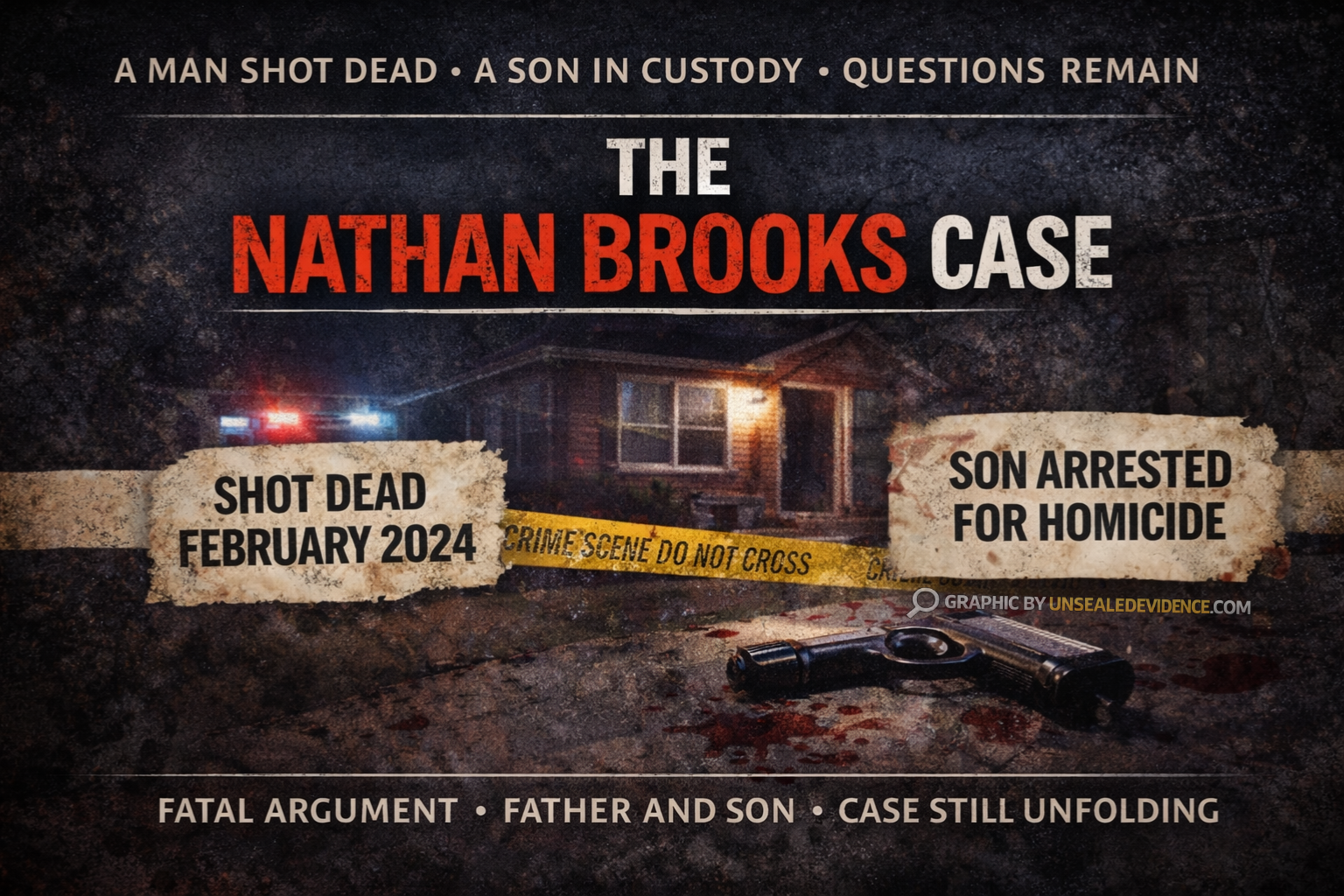
Nathan Brooks and the Night Bellaire Lost Halloween
Shadows of Satan: The Bellaire Halloween Murders Bellaire, Ohio sits quietly along the Ohio River, a steel town where families have known one another for generations. In the fall

Christmas Eve Vanishing: The Camila Mendoza Olmos Story
Christmas Eve Vanishing: The Camila Mendoza Olmos Story Camila Mendoza Olmos, a 19-year-old college student in northwest Bexar County, Texas, disappeared on the morning of Wednesd
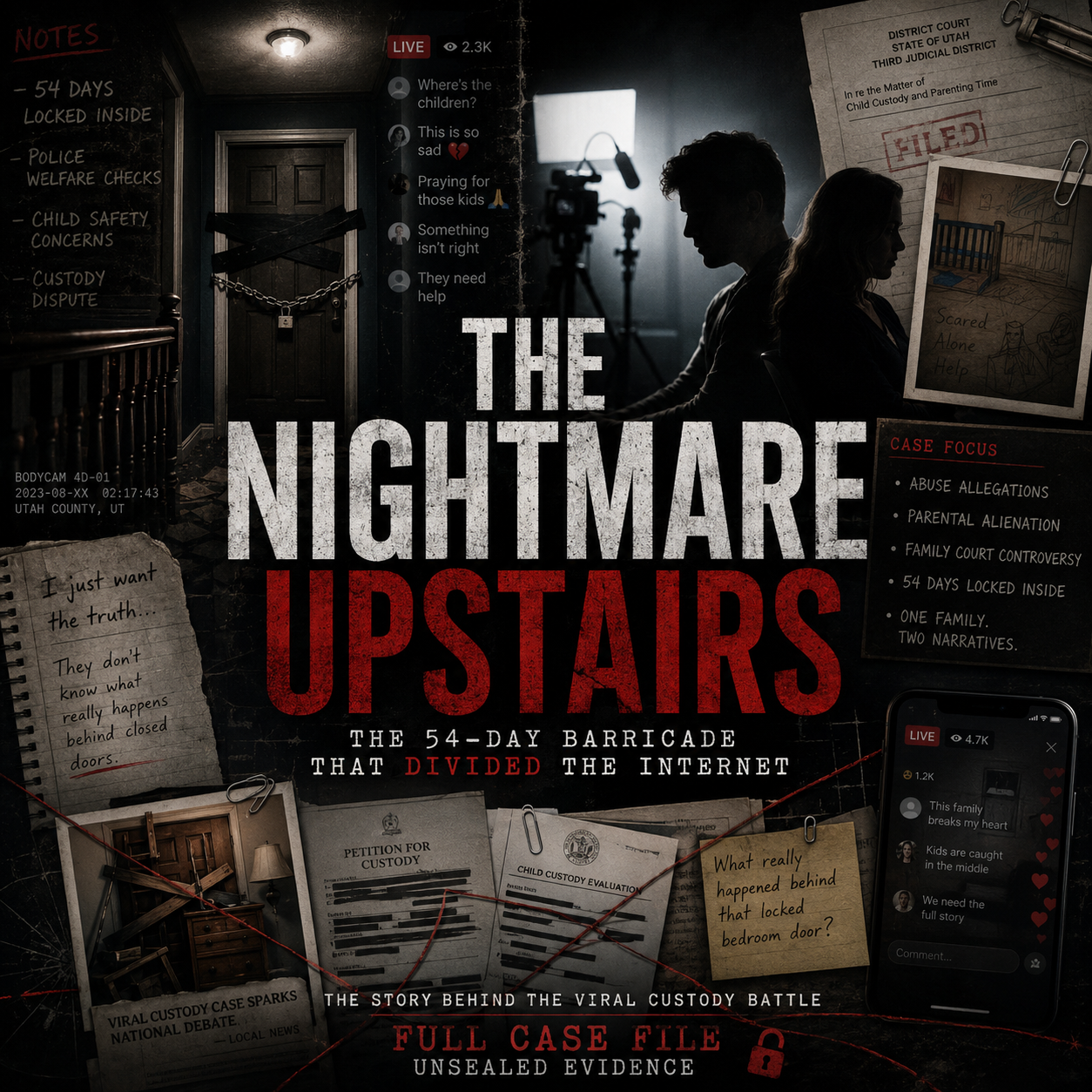
Behind the Locked Door: The Ty and Bryn Larson Custody Battle and the 54-Day Barricade
The Ty and Bryn Larson case became one of the most controversial and widely discussed family court stories in recent years after two Utah siblings barricaded themselves inside an u
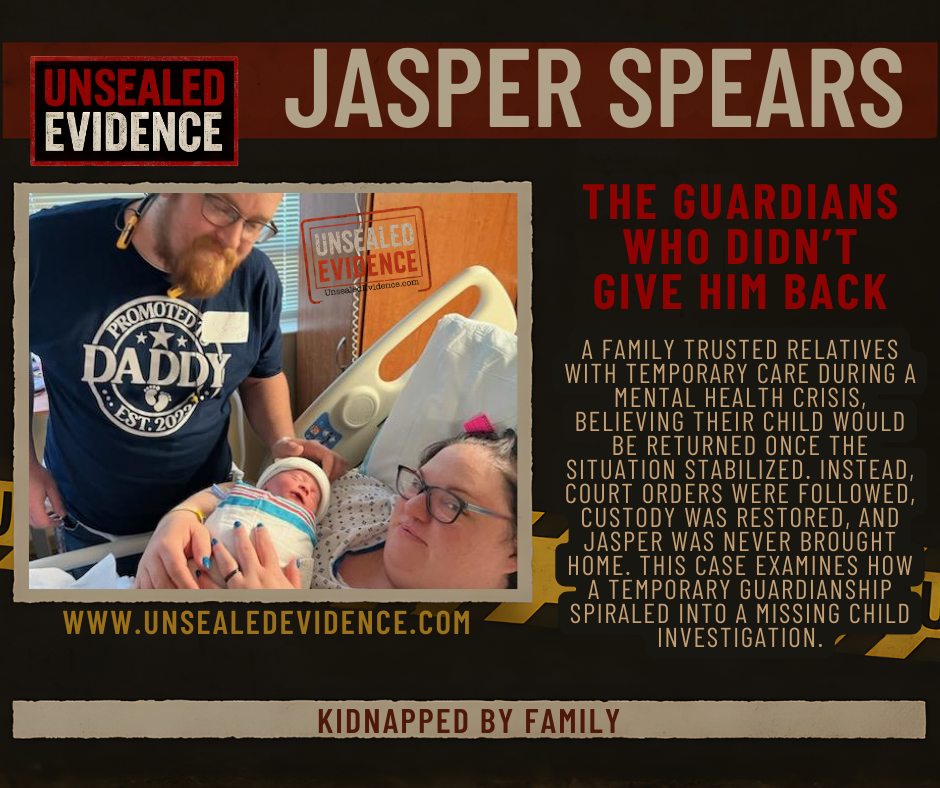
The Guardians Who Didn’t Give Him Back: Jasper Michael Spears
The Guardians Who Didn’t Give Him Back: The Disappearance of Jasper Michael Spears The Hospital Visit That Started Everything Jasper Michael Spears was born on November 6,
The Strongsville Impact: The Deaths of Dominic Russo and Davion Flanagan
In the early morning hours of July 31, 2022, a devastating crash in Strongsville left 20-year-old Dominic Russo and 19-year-old Davion Flanagan dead after a Toyota Camry driven by
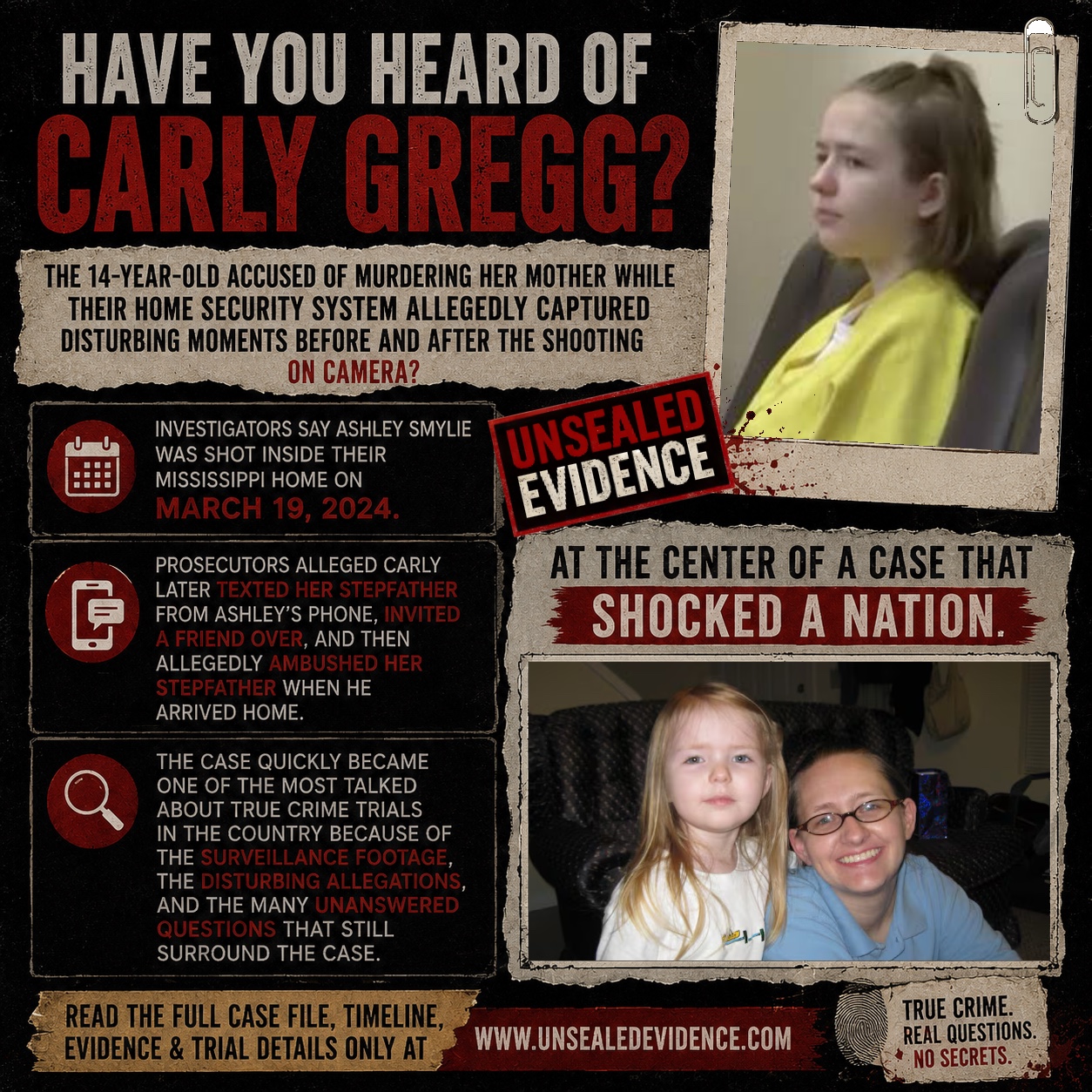
The Day the Silence Broke: A Human Account of the Carly Gregg Tragedy
March 19, 2024. A Tuesday. In the quiet, unassuming town of Brandon, Mississippi, a day that began with the mundane rhythm of school and work would spiral into a vortex of horror,
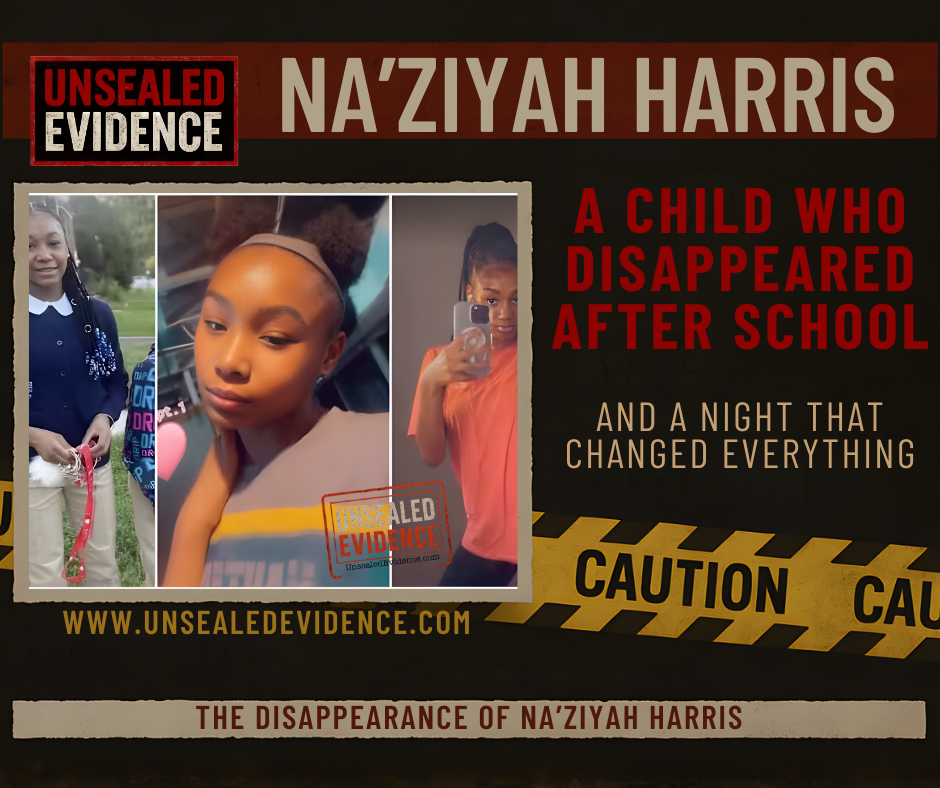
The Rugrats Coat Disappearance: The Killing of Na’Ziyah Harris Without a Body
Vanished After the Bus Stop: A Detroit Afternoon That Changed Everything On January 9, 2024, a thirteen-year-old girl stepped off her school bus on Detroit’s east side, wear