A Quiet Afternoon Inside the Hollywood Mall
July 27, 1981 began as an ordinary summer day in Hollywood, Florida. The air was heavy with heat, the kind typical of South Florida afternoons, and families filled the Hollywood Mall to escape it. Inside the Sears department store, six-year-old Adam John Walsh walked beside his mother, Revé Walsh, unaware that this routine errand would become the last ordinary moment of his life.
Shortly after noon, Revé allowed Adam to remain near an Atari 2600 video game display positioned close to the store’s entrance. Several older boys were gathered there, taking turns playing. This decision reflected the norms of the era—parents commonly allowed brief, unsupervised moments for children in public spaces.
Revé walked approximately seventy-five feet away to the lamp department to ask about a sale item. She expected to return within minutes.
When she came back, Adam was gone.
Store employees were alerted. Adam’s name was paged repeatedly over the intercom. Revé and a store manager searched aisle after aisle, moving from department to department as concern shifted to panic. Nearly an hour passed before police were called.
By then, whatever had happened inside Sears had already spilled out into the parking lot—and beyond.
The Child at the Center of the Story
Adam John Walsh was six years old. He was described by those who knew him as shy, gentle, and eager to please. He was the kind of child who followed rules, trusted adults, and avoided conflict. Adam loved cartoons, toys, and spending time with his parents. He was a normal child in every sense—one whose life revolved around family, play, and the simple routines of childhood.
He was the only son of John and Revé Walsh, a young couple raising their family in South Florida. Adam mattered not because of what would later be built in his name, but because he was deeply loved and irreplaceable.
The Moment Everything Went Wrong
What Revé did not see was a brief altercation at the video game kiosk. The older boys began arguing over whose turn it was to play. A Sears security guard, noticing the dispute, intervened and ordered the group to leave the store.
Adam, compliant and quiet, followed the boys out—through a different entrance than the one he had used with his mother.
Outside, the older boys scattered across the parking lot. Adam was left alone.
This single moment—an ejection meant to restore order—would later be recognized as the critical failure point.
A Community Search That Ended in Tragedy
For the next two weeks, South Florida searched for Adam Walsh. Volunteers canvassed neighborhoods. Law enforcement agencies coordinated searches across counties. Media coverage expanded rapidly, turning Adam’s face into a familiar image across the nation.
The hope was relentless.
On August 10, 1981, that hope collapsed.
Two fishermen discovered a child’s severed head floating in a drainage canal near Highway 60 in rural Indian River County, approximately 130 miles north of Hollywood. The distance suggested the involvement of a vehicle and deliberate transport.
The remainder of the child’s body was never found.
A Forensic Identification Clouded by Limitations
In 1981, forensic science existed in a world without DNA profiling. Identification relied heavily on forensic odontology, especially when fingerprints or full skeletal remains were unavailable.
The medical examiner compared the remains to Adam’s dental records. The identification was based primarily on a single dental filling located on a lower molar.
The identification was announced as positive.
However, questions emerged almost immediately.
Adam had been missing his two top front teeth at the time of his disappearance—a fact supported by photographs and witness statements. The recovered remains showed a top front tooth that had nearly fully erupted, a process that typically takes several months. This timeline conflicted with the fourteen-day window between Adam’s disappearance and the discovery of the remains.
Compounding these concerns, critical forensic materials later went missing, including dental X-rays and portions of the autopsy documentation across multiple jurisdictions.
Despite these discrepancies, the identification was never officially reversed.
Suspects, Confessions, and a Case That Stalled
As years passed, the investigation fractured under procedural errors and lost evidence.
In the early 1980s, Ottis Elwood Toole, a drifter and convicted killer, emerged as a suspect. While incarcerated for unrelated crimes, Toole confessed to abducting and killing Adam Walsh. He provided details investigators believed were non-public.
Yet Toole’s credibility was deeply compromised. He was known to confess falsely, often recanting later. Any chance of prosecution was destroyed when key physical evidence disappeared—including the vehicle Toole allegedly used, carpet samples that reportedly contained blood, and the weapon he claimed was involved.
Toole died in prison in 1996.
In the early 1990s, attention briefly shifted to Jeffrey Dahmer, following his arrest in Wisconsin. Witnesses placed a man matching Dahmer’s description at the mall that day, and aspects of his known behavior overlapped disturbingly with the Walsh case. Dahmer denied involvement, and investigators ultimately dismissed him as a suspect.
For decades, the case remained officially unsolved.
A Cold Case Reopened
In 2006, at Revé Walsh’s request, retired homicide detective Joe Matthews undertook a complete review of the case file—over 10,000 pages of records, interviews, and recordings.
Matthews concluded that the original investigation had been plagued by missteps and that Ottis Toole’s confessions contained details unlikely to be fabricated. His findings prompted a renewed review by the Hollywood Police Department.
The Official Decision
On December 16, 2008, Hollywood Police announced that the case was officially closed. The department stated it was satisfied that Ottis Toole was responsible for Adam Walsh’s abduction and death.
No charges were filed. No trial occurred. No physical evidence remained.
For the Walsh family, the announcement provided a form of acknowledgment—but not the certainty that evidence and due process might have delivered.
Questions That Will Never Fully Close
Why was a child expelled from a store without ensuring parental contact?
How were critical forensic records lost across multiple agencies?
Can a case be definitively resolved without physical evidence?
Would modern forensic tools have changed the outcome?
These questions remain embedded in the case’s history.
The Legacy That Changed a Nation
Adam Walsh’s death did not end with a conviction, but it reshaped America.
His parents transformed grief into action—helping to establish the National Center for Missing & Exploited Children, inspiring Code Adam safety protocols, and contributing to sweeping federal legislation that redefined child protection and offender monitoring.
What began as a quiet trip to Sears became the moment America lost its sense of safety—and began building something stronger in its place.
Continue Investigating

Christmas Eve Vanishing: The Camila Mendoza Olmos Story
Christmas Eve Vanishing: The Camila Mendoza Olmos Story Camila Mendoza Olmos, a 19-year-old college student in northwest Bexar County, Texas, disappeared on the morning of Wednesd
Behind the Locked Door: The Ty and Bryn Larson Custody Battle and the 54-Day Barricade
The Ty and Bryn Larson case became one of the most controversial and widely discussed family court stories in recent years after two Utah siblings barricaded themselves inside an u
The Guardians Who Didn’t Give Him Back: Jasper Michael Spears
The Guardians Who Didn’t Give Him Back: The Disappearance of Jasper Michael Spears The Hospital Visit That Started Everything Jasper Michael Spears was born on November 6,
The Strongsville Impact: The Deaths of Dominic Russo and Davion Flanagan
In the early morning hours of July 31, 2022, a devastating crash in Strongsville left 20-year-old Dominic Russo and 19-year-old Davion Flanagan dead after a Toyota Camry driven by
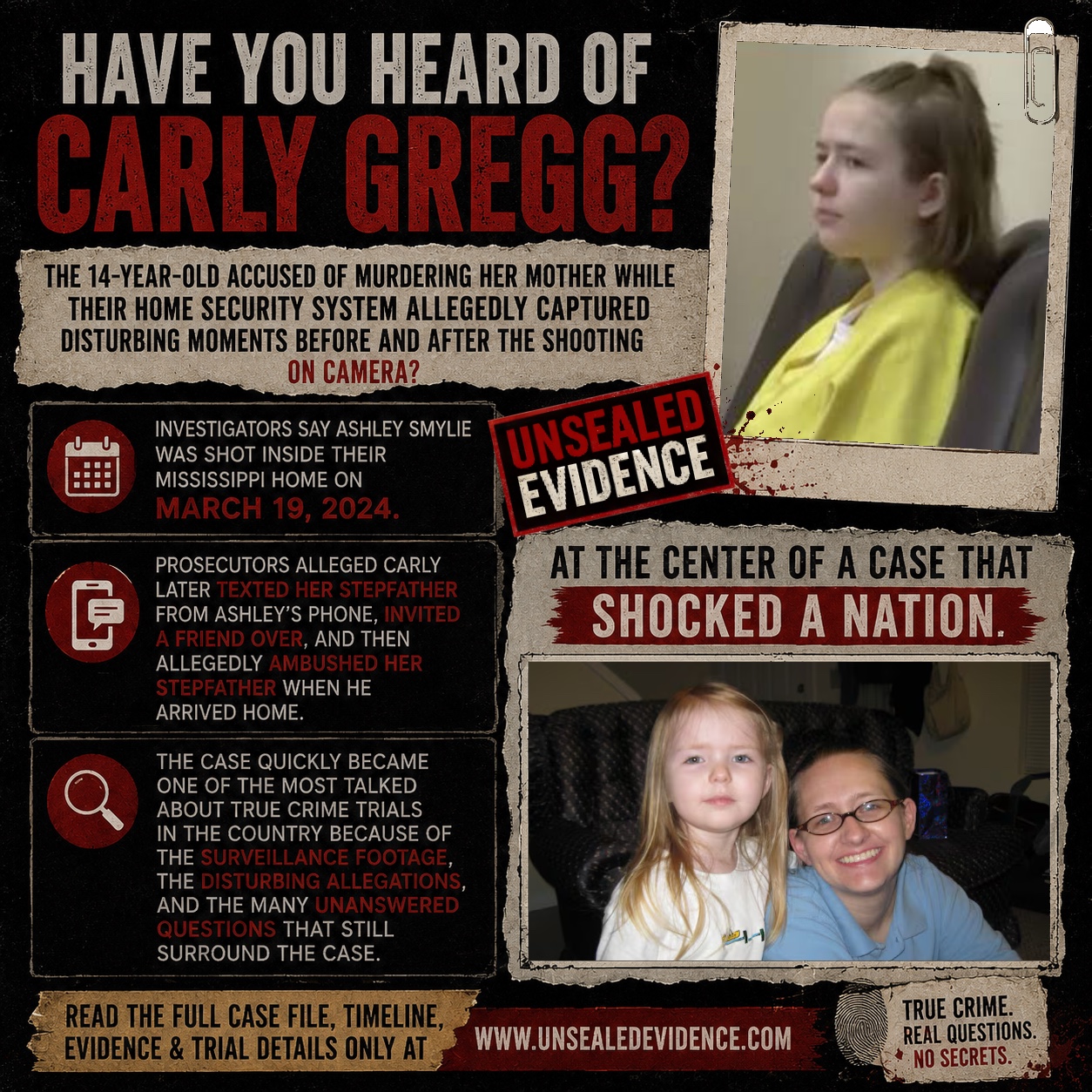
The Day the Silence Broke: A Human Account of the Carly Gregg Tragedy
March 19, 2024. A Tuesday. In the quiet, unassuming town of Brandon, Mississippi, a day that began with the mundane rhythm of school and work would spiral into a vortex of horror,
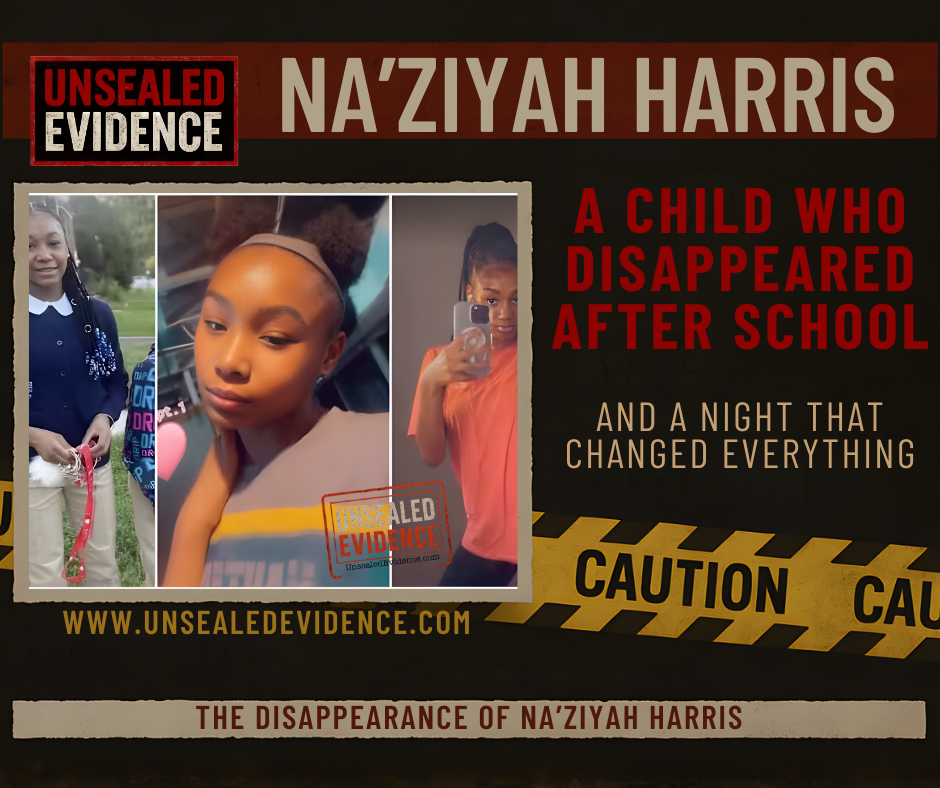
The Rugrats Coat Disappearance: The Killing of Na’Ziyah Harris Without a Body
Vanished After the Bus Stop: A Detroit Afternoon That Changed Everything On January 9, 2024, a thirteen-year-old girl stepped off her school bus on Detroit’s east side, wear
Dance Floor Deception: The Washington, Illinois Case of Robyn Polston and the Newborn at the Center of It All
The Night It Began at a School Dance In May 2023, inside a junior high school gymnasium in Washington, Illinois, colored lights reflected off polished floors as students gathered
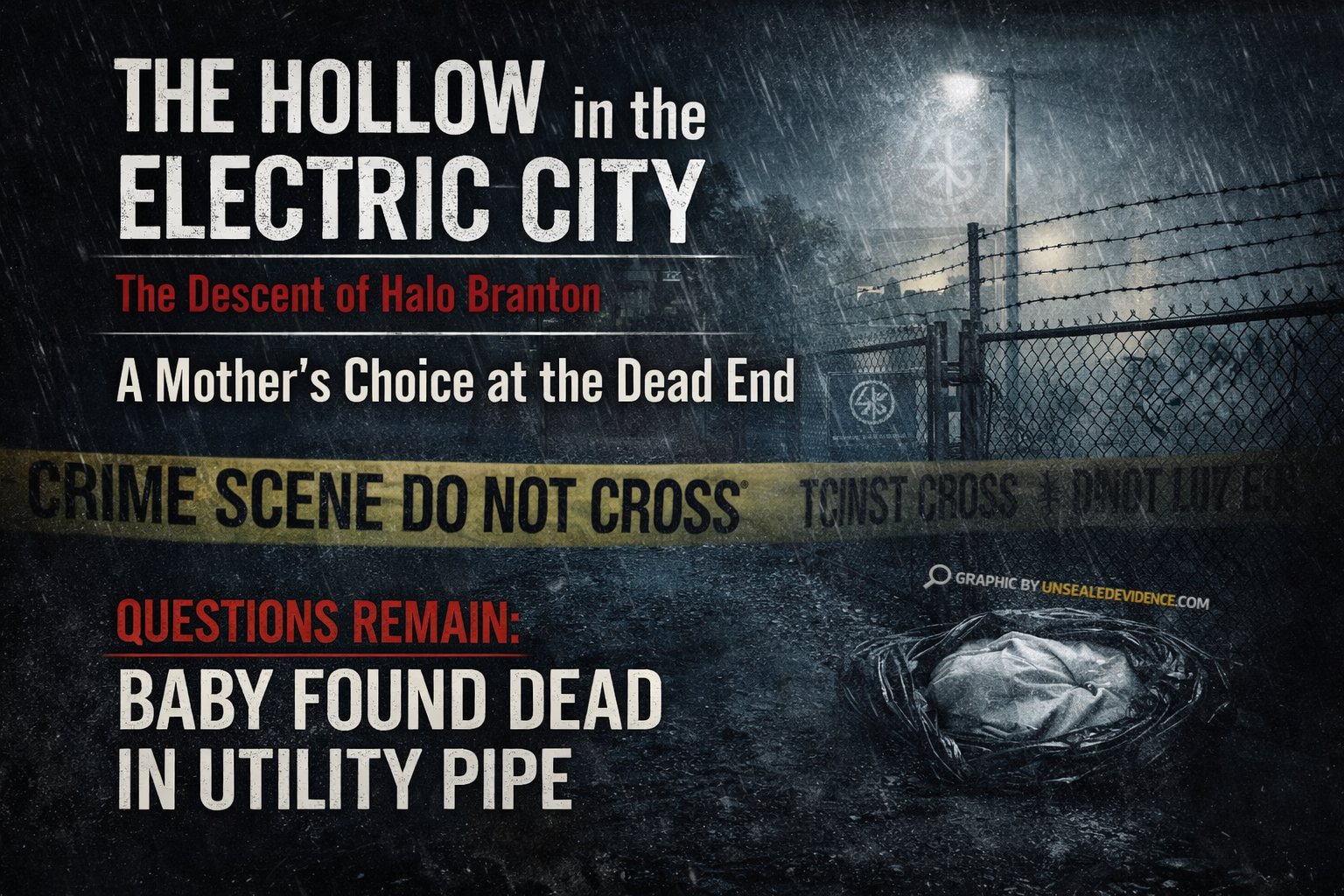
The Hollow in the Electric City: The Descent of Halo Branton
The Hollow in the Electric City: The Descent of Halo Branton A Mother’s Choice at the Dead End In the early hours of March 10, 2024, the city of Schenectady, New York&mdash