
Case Update Notice
This case file has been updated to correct earlier public reporting after communication with an individual with firsthand knowledge of case-related information. Certain identifying details have been intentionally limited to protect their privacy and safety.
We appreciate them taking the time to help clarify details so accurate information can be shared with one goal in mind — finding Devlin Tait.
A Morning That Didn’t Raise Alarms — Until It Did
On the morning of April 21, 2025, Devlin Tait followed what looked like his normal routine in Lake Odessa, Michigan.
There was nothing dramatic about it. No argument. No signs of distress. No one sounding an alarm right away.
Devlin is believed to have left home around 7:28 a.m. That wasn’t unusual. He was known for walking daily, sometimes long distances, often through town and beyond. Walking was part of his routine.
At 8:21 a.m., Devlin was captured on camera at Carl’s Supermarket in Lake Odessa. That footage is the last 100% confirmed sighting of him.
After that, there is nothing solid. No confirmed camera footage. No verified sightings. No activity on his cards or identification. Just a growing gap where Devlin should have been.
By the end of the day, concern had turned into fear. Devlin didn’t come home. He didn’t check in. He didn’t show up where people expected to see him.
And for a town that knew him well, that silence was loud.
Who Devlin Is — Beyond Early Misreporting
Early descriptions of Devlin painted him as childlike and physically limited. Those descriptions were incomplete and, in key ways, incorrect.
Devlin was legally deemed competent by a judge.
He did not have physical disabilities that prevented him from walking, completing chores, or navigating his daily life. In fact, he regularly took long walks — including walking between Lake Odessa and Hastings, something many people would find exhausting.
People who knew him described Devlin as capable, independent in daily routines, and deeply woven into the fabric of the community.
Devlin also had mild Tourette’s syndrome. Those familiar with him state that it did not significantly complicate his daily life, limit his independence, or interfere with his ability to navigate the community.
At the same time, Devlin could be vulnerable.
Not because he was incapable — but because he trusted easily. He wanted connection. And people in town were known to take advantage of that. Friends would tell him to meet them somewhere, only to never show up. Devlin would still go. Still walk there. Still believe.
That vulnerability matters in understanding what may have happened — without stripping him of agency or dignity.
A Known Face in a Small Town
Devlin wasn’t invisible.
He walked through town daily. He checked in with people he cared about. He visited places routinely — including the police station, where he would talk with the chief. He attended church every week by choice. He was well known at Pennies Pizza, where staff regularly fed him simply because they knew him and cared about him.
Devlin had a habit of forming close emotional bonds with women who gave him attention. If someone treated him kindly, he would quickly see them as family — often referring to them as an “aunt.” He made it a point to check on all of his “aunts” daily.
He was social. Familiar. Recognized.
That’s what makes this case especially unsettling.
For someone so visible, so routine-oriented, and so embedded in the community… no one has a confirmed sighting of Devlin after 8:21 a.m.
Anger Issues, Legal Context, and Reality
Devlin did have documented anger issues.
He was reportedly on probation related to a prior physical assault involving his grandmother. This is not included to assign blame or character judgment — only to provide full, accurate context.
Those close to him described Devlin as “normal” in daily functioning, but emotionally reactive at times. He could become angry, frustrated, or overwhelmed — particularly when routines were disrupted or emotions ran high.
This context matters because it helps explain Devlin’s mental and emotional landscape without exaggeration or erasure.
Medical Risk That Cannot Be Ignored
One of Devlin’s daily medications is Lithium.
Missing doses or abruptly stopping Lithium can cause severe medical consequences, including extreme psychological distress and psychosis. This is a medical risk — not speculation.
Devlin did not have his medication with him when he went missing.
That fact alone elevates the urgency of this case.
The Search — Thorough and Exhaustive
Search efforts in and around Lake Odessa have been extensive.
According to information provided by an individual with firsthand knowledge of search activity:
- Lake Odessa has been searched multiple times
- Searches included boots on the ground, K9 units, and drones
- The local dump has been searched
- No physical trace of Devlin has been found
This matters because it removes some assumptions. Devlin did not simply wander into nearby woods and remain undiscovered. If he were still in Lake Odessa, signs would likely have surfaced by now.
They haven’t.
The Phone, The Silence, and The Gaps
Devlin’s phone is still missing.
At approximately 11:38 p.m., a phone ping associated with Devlin was recorded in the area of a local trailer park. This ping does not confirm Devlin’s location at that time, only that his phone was active or detected in that general area. The phone itself has not been recovered.
It is described as a cheap Android phone, likely a Boost prepaid, in a red phone case. Efforts are ongoing to locate it.
Since Devlin went missing:
- A BOLO has been placed on his ID, Social Security card, and food assistance card
- None have been used
- No financial activity has been recorded
Facebook Activity Clarification
Devlin’s Facebook account raises additional questions, but timing is critical to understand this accurately.
The Facebook posts in question were not made while Devlin was missing.
Those posts were visible on his account months prior to his disappearance, and screenshots of them were taken months back. More recently, it was noted that those older posts are now missing.
It has been confirmed that the family does not have access to Devlin’s social media accounts and is not believed to be responsible for any changes.
A source was able to message Devlin’s Facebook page early in the case. More recently, attempts to message the account result in “Cannot send.”
At this time, it is not known whether this is due to Facebook actions, account restrictions, or something else entirely.
Family Cooperation and Efforts
Contrary to some online speculation, sources confirm that the Tait family has been cooperative.
Family members, including Sabrina, Will, and Tamara, have reportedly offered to take lie detector tests. There is no indication from search-connected sources that the family has obstructed efforts.
There is also a $6,000 reward being offered for information leading to Devlin. Details about who established the reward are unclear, but increasing it could significantly increase the chance that someone comes forward.
The Questions That Still Haunt This Case
After all the searching, the same questions remain:
- Where did Devlin go after leaving Carl’s at 8:21 a.m.?
- Did he start walking toward another town?
- Did someone offer him a ride?
- Did someone see him and not realize he was missing?
- Did he seek out a place or person connected to music — something he loved?
- How did someone so visible vanish without a single confirmed sighting?
Lake Odessa has very limited camera coverage. That gap may be one of the biggest obstacles in this case.
🕯️ Learn More • Reflect • Remember
If this case stayed with you, these resources may help you understand the investigation, process the impact, or honor the victim.
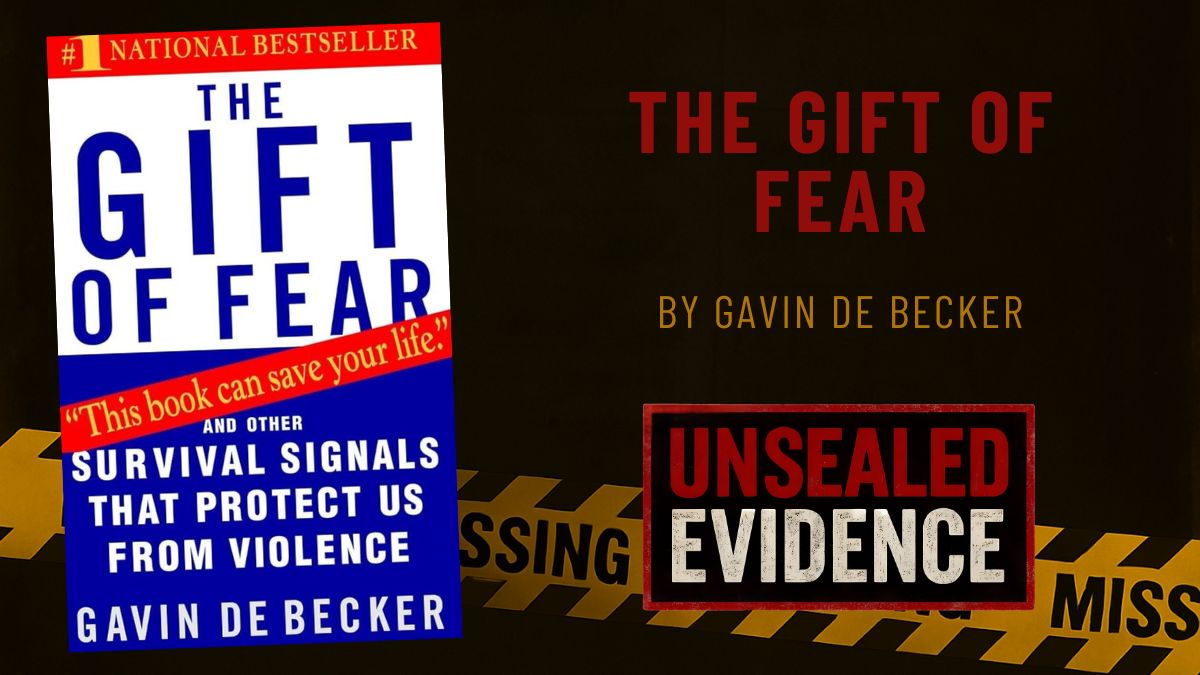
This book explores intuition, vulnerability, and how danger often appears quietly within ordinary situations. It is frequently referenced in investigative and missing-person discussions because it explains how small behavioral cues and overlooked moments can matter — especially when someone is more trusting or vulnerable. It’s a reflective, awareness-focused read rather than entertainment.
👉 View on Amazon
Written by a former FBI profiler, this book provides insight into how investigators interpret behavior, silence, and inconsistencies when answers are limited. While it does not focus on a single case, it offers perspective on how professionals analyze what isn’t being said or seen — a recurring challenge in missing-person investigations.
👉 View on Amazon
This book follows the real work of forensic investigators who step in when cases go cold and answers are scarce. It focuses on patience, overlooked details, and the long, often quiet process of trying to bring clarity to unresolved cases. It’s a reflective, investigative read for those trying to understand how missing-person cases are examined when information is limited and time keeps moving forward.
👉 View on AmazonDisclosure: Some links may be affiliate links. If you purchase through them, Unsealed Evidence may earn a small commission at no extra cost to you.
Continue Investigating

Christmas Eve Vanishing: The Camila Mendoza Olmos Story
Christmas Eve Vanishing: The Camila Mendoza Olmos Story Camila Mendoza Olmos, a 19-year-old college student in northwest Bexar County, Texas, disappeared on the morning of Wednesd
Behind the Locked Door: The Ty and Bryn Larson Custody Battle and the 54-Day Barricade
The Ty and Bryn Larson case became one of the most controversial and widely discussed family court stories in recent years after two Utah siblings barricaded themselves inside an u
The Guardians Who Didn’t Give Him Back: Jasper Michael Spears
The Guardians Who Didn’t Give Him Back: The Disappearance of Jasper Michael Spears The Hospital Visit That Started Everything Jasper Michael Spears was born on November 6,

The Strongsville Impact: The Deaths of Dominic Russo and Davion Flanagan
In the early morning hours of July 31, 2022, a devastating crash in Strongsville left 20-year-old Dominic Russo and 19-year-old Davion Flanagan dead after a Toyota Camry driven by
The Day the Silence Broke: A Human Account of the Carly Gregg Tragedy
March 19, 2024. A Tuesday. In the quiet, unassuming town of Brandon, Mississippi, a day that began with the mundane rhythm of school and work would spiral into a vortex of horror,
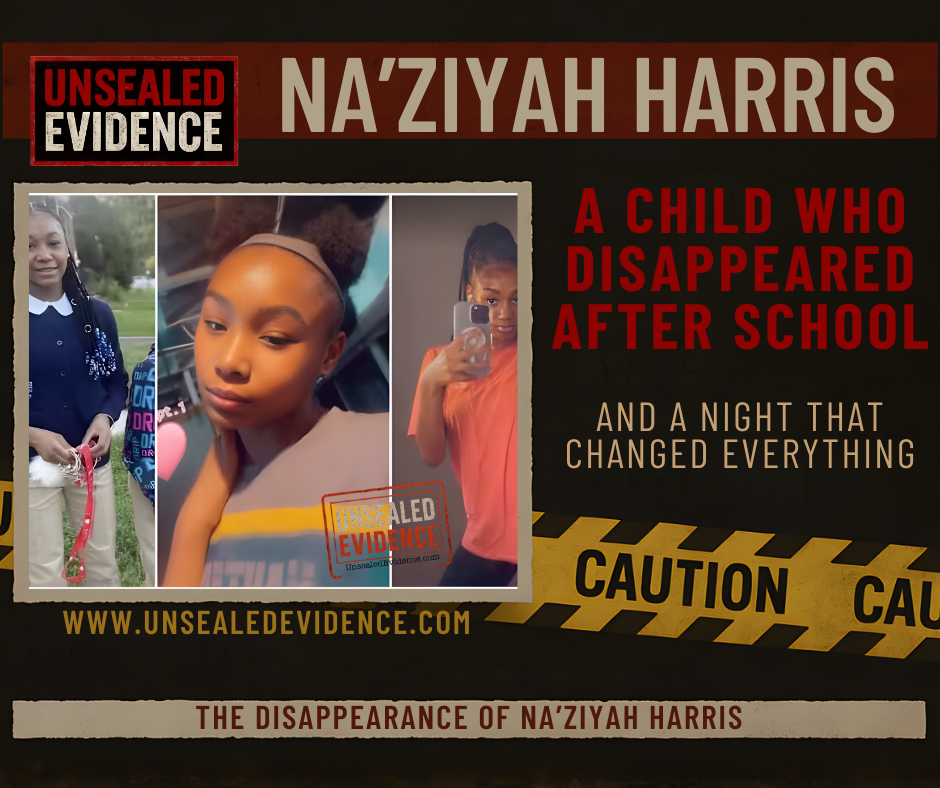
The Rugrats Coat Disappearance: The Killing of Na’Ziyah Harris Without a Body
Vanished After the Bus Stop: A Detroit Afternoon That Changed Everything On January 9, 2024, a thirteen-year-old girl stepped off her school bus on Detroit’s east side, wear
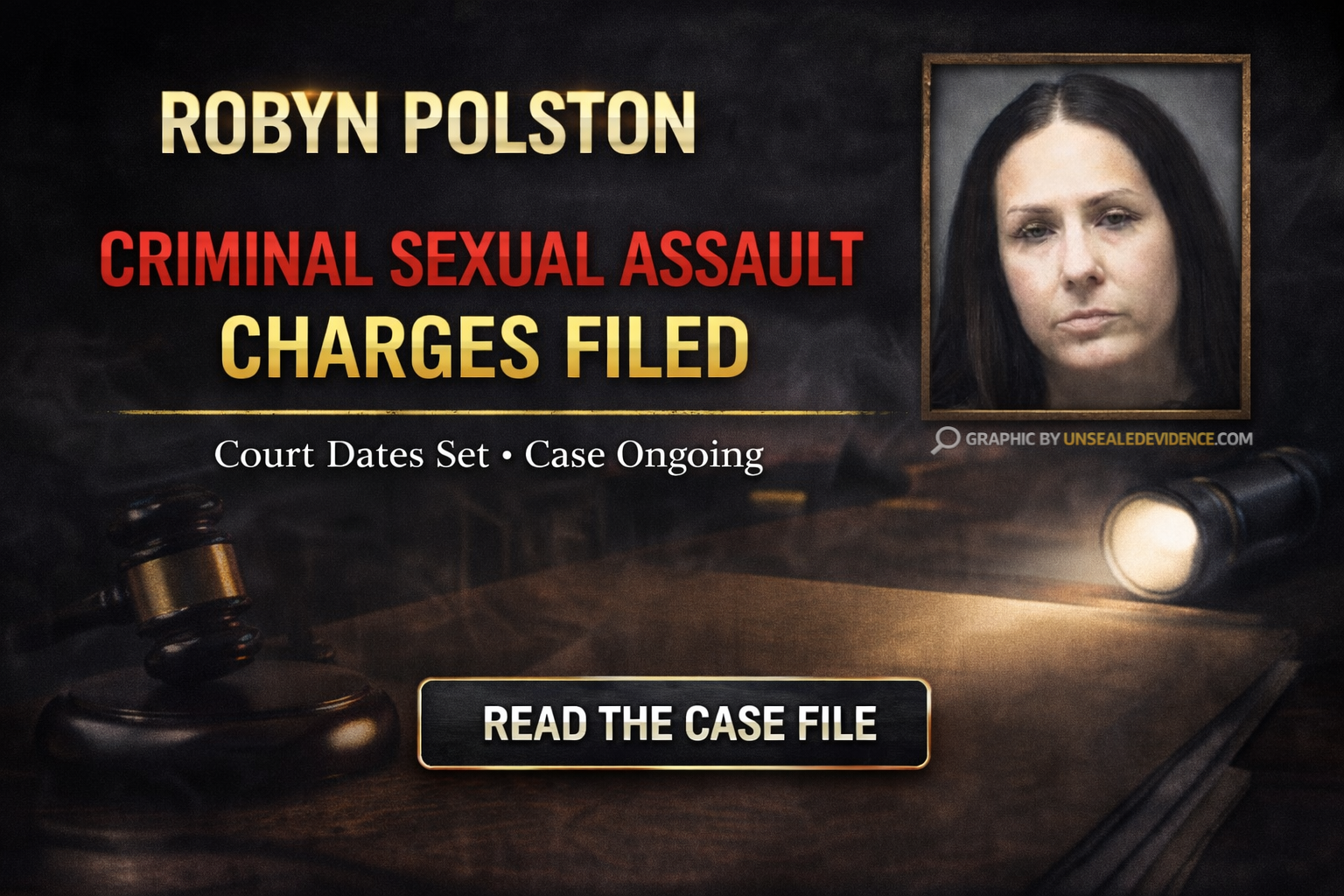
Dance Floor Deception: The Washington, Illinois Case of Robyn Polston and the Newborn at the Center of It All
The Night It Began at a School Dance In May 2023, inside a junior high school gymnasium in Washington, Illinois, colored lights reflected off polished floors as students gathered

Taken at Sears: The Abduction That Changed America Forever
Forensic and Socio-Legislative Analysis of the Adam Walsh Abduction and Its Impact on American Jurisprudence The abduction and murder of six-year-old Adam Walsh on Jul