
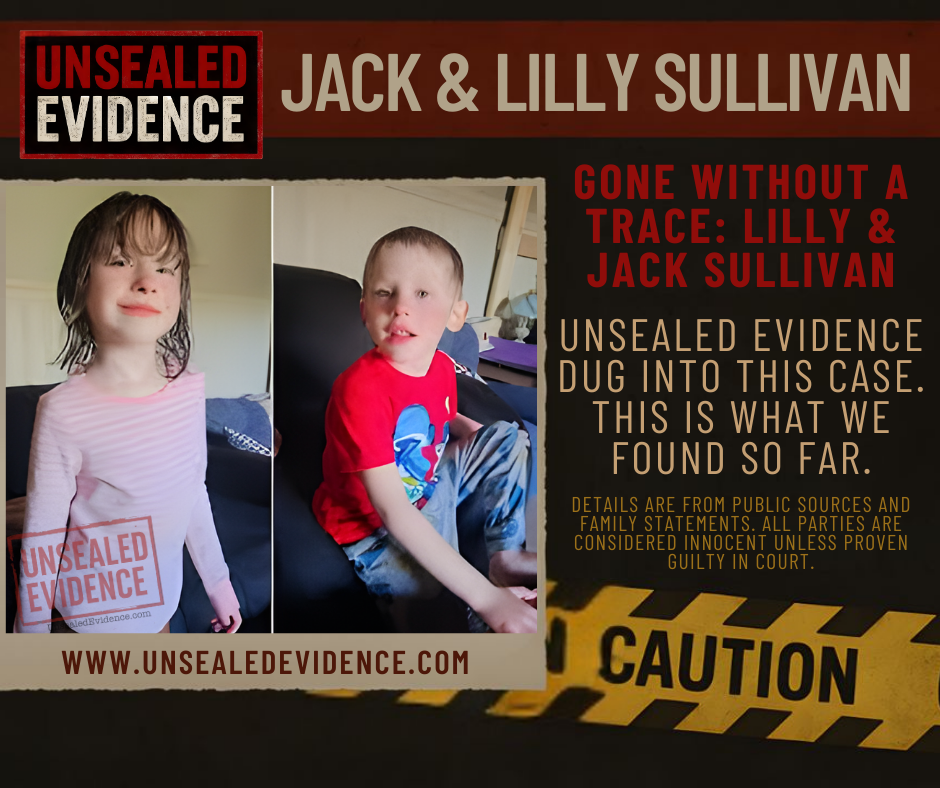
A Quiet Morning That Never Should Have Become a Nightmare
There are some cases that crack a community straight down the center—cases that make people question everything they thought they knew about safety, family, and how quickly life can shatter. The disappearance of six-year-old Lilly Sullivan and four-year-old Jack Sullivan is one of those stories. It began on an ordinary rural morning in Lansdowne Station, Nova Scotia… and it still hasn’t found its ending.
The Sullivan family lived on Gairloch Road, tucked into a wooded, rugged landscape full of steep banks, thick brush, and fast-moving water. It’s the kind of place where the world feels quiet and children’s laughter carries through the trees… until the day it didn’t.
According to the family, the night before the children vanished was unremarkable. They’d run errands earlier in the day and were seen on surveillance at a Dollarama store—Lilly holding a little toy, Jack trailing behind, the baby on a hip, everyone alive and present and accounted for. It was the last confirmed sighting of them by anyone outside their home.
The next morning—May 2, 2025—should have been simple. Breakfast. Cartoons. Kids playing while parents gathered themselves for the day. Instead, the morning dissolved into a timeline full of gaps, silences, and moments no one can fully reconstruct. Their mother reported marking the kids absent from school early that morning due to illness. She and the children’s stepfather were in the bedroom with the baby, they later said, while Lilly wandered in and out and Jack played somewhere else in the house.
Sometime between roughly 8:00 and 9:40 a.m., the children’s voices went quiet. The parents said they looked inside the house. Nothing. They checked the yard. Nothing. The stepfather’s mother—who lived in a small building on the same property—reported hearing the kids laughing on the swings around 8:50 a.m., only to fall back asleep and wake to a different reality.
At 10:01 a.m., the mother dialed 911. Her children were missing.
Within half an hour, RCMP officers were on the property. Within hours, the woods were swarmed by searchers, dogs, drones, helicopters, officers, volunteers, neighbors, and strangers. For days, the land echoed with people calling the children’s names. People combed swamps, checked rivers, pushed through brush so thick it tore clothing. The world watched Nova Scotia search for two tiny missing siblings.
What no one expected was the silence that followed—no footprints conclusively linked to them, no clothing confirmed as theirs, no bodies, no clear trace. Just a pink blanket snagged in a tree, a second piece of that same blanket later found tossed in the trash, and a timeline that raised more questions than answers.
This story is still unfolding, still raw, still painful, and still begging for truth. And truthfully? We may not be close to it yet.
The Children at the Heart of the Tragedy
Lilly was six—old enough to have opinions, favorites, and friendships, young enough that the world still felt magical. Described by those who knew her as a little girl with personality and spark, she was the kind of child who should have been learning to read chapter books, not becoming the subject of a nationwide search.
Jack was four—a little brother full of energy, curiosity, and that tiny, sweet boldness little boys often carry. He was often close to Lilly, trailing behind her, laughing with her, orbiting her like siblings do. On the day he vanished, he was reportedly wearing a pair of blue dinosaur boots that should have been easy for search teams to spot in the woods.
The heartbreaking truth is that the world only knows them now for their disappearance, not for their full lives, and that is already too much tragedy for two young children.
Threads Pulled From a Complicated Story
The days leading up to the disappearance matter because they show the last verifiable movements of the kids. On April 30, the family ran errands. On May 1, the surveillance video at Dollarama captured the children alive and with family. They were not in school April 30, May 1, or May 2—explained partly by the PD day and partly by illness—but the gap still troubles many people following the case.
On May 2, the timeline inside the house relies entirely on statements from the adults. The mother marked the kids absent at 6:15 a.m. The children were reportedly moving freely inside the home between 8:00 and 9:40. Then quiet. The grandmother on the property said she heard them playing outside around 8:50 a.m.
Once the 911 call happened, the official search exploded in scale. It involved:
- helicopters
- drones
- canine teams
- underwater searches
- rope teams in steep terrain
- door-to-door checks
- miles of wooded ground
Neighbors and volunteers jumped in. Despite the intense effort, not a single verified trace of the children was found in those first days.
Investigators openly said early on that they believed the kids likely wandered away and succumbed to the harsh environment. But as days turned into weeks, that theory became harder to justify. Weather, terrain, time—none of it lined up cleanly with the absolute lack of evidence.
Then there were the items:
A pink blanket believed to belong to Lilly was found snagged in a tree about a kilometre from the home on day one. Later, another fragment of that same blanket surfaced in a trash bin. The RCMP has never shared exactly what testing revealed, only that they recovered it and sent it for analysis.
There was also talk of a child-sized boot print near a river area—never confirmed publicly as belonging to either child.
Months later, a volunteer search by an Ontario missing persons group uncovered a child’s T-shirt, a blanket, and a tricycle. RCMP examined them and ruled that none were related to the missing siblings.
Despite endless theories online, the RCMP has repeatedly stated that there is no confirmed evidence of an abduction, while simultaneously refusing to rule out suspicious circumstances. They’ve walked a tightrope between “no sign of criminality” and “we cannot rule anything out.”
That vagueness has only fueled public confusion and suspicion.
When Investigators Step Into the Unknown
The deeper investigators went, the stranger the case seemed to get.
Polygraph exams were conducted—on the children’s mother, their stepfather, the step-grandmother, and their biological father. Police have said only that some results suggested truthfulness, while others were inconclusive due to physiological factors. None of the adults were publicly named as suspects, and investigators emphasized that polygraphs are merely tools, not proof.
Court documents later revealed that cellphone data, financial records, online activity, and digital footprints were all examined. Nothing publicly released has pointed to a clear criminal act, but nothing has fully supported the idea that the children simply wandered into the woods and vanished either.
Investigators reviewed reports from community members who said they heard a car on the roadway around the time the children disappeared. Police later stated they could not verify any such vehicle activity and found no evidence of an unknown driver entering or leaving the property at the relevant time.
Surveillance cameras along major routes didn’t show the children. No eyewitness has come forward saying they saw the kids walking along the road. One woman reported seeing a girl and boy being led by an older woman near a vehicle, but investigators have never confirmed whether the children she saw were Lilly and Jack.
The heart of the problem is simple: nothing conclusively supports any theory—not wandering, not foul play, not abduction. It is a case suspended between possibilities.
Unanswered Questions That Still Haunt the Case
Why were the children reportedly inside the home moments before disappearing but never seen or heard by anyone afterward?
Why was a piece of Lilly’s blanket in a tree, and how did another part of it end up in a trash bin?
Why didn’t the search teams—hundreds of them—find a single definitive trace?
Why did no neighbor see children walking along the road?
Did something happen inside the home? Did the children wander? Was there an unreported moment where they left the property with someone? Were they taken? Did an accident occur and circumstances become altered after the fact?
Every theory is on the table. None are proven.
And that is the most devastating part.
Until the children are found—alive or deceased—this case remains a maze with multiple exits and no clear path.
KEY INDIVIDUALS & RELATIONSHIPS
Lilly Sullivan – Victim
Six-year-old child who disappeared on May 2, 2025.
Jack Sullivan – Victim
Four-year-old child who disappeared alongside his sister.
Malehya Brooks-Murray – Mother
Mother of Lilly and Jack; was home at the time of their disappearance; made the 911 call; has spoken publicly about her devastation.
Daniel Martell – Stepfather
Stepfather to the children; was in the home during the reported timeline; participated in searches; underwent polygraph testing; has spoken about his belief that the children did not simply wander off.
Meadow – Younger sibling
Approximately one year old at the time; was in the bedroom with the adults during the morning timeline.
Janie MacKenzie – Stepfather’s mother
Lived in a separate building on the same property; reported hearing the children playing outside around 8:50 a.m.
Cody Sullivan – Biological father
Had not seen the children in years at the time of the disappearance; cooperated with investigators; underwent polygraph examination.
Extended relatives, including grandparents and other family members
Some have publicly called for expanded investigative efforts, greater transparency, and inquiries into prior child protection involvement.
Please Bring Me Home – Volunteer search organization
Conducted later large-scale searches; found items that were ultimately deemed unrelated.
RCMP – Investigating agency
Major Crime Unit, Search and Rescue teams, and support units have all been involved since day one.
Continue Investigating
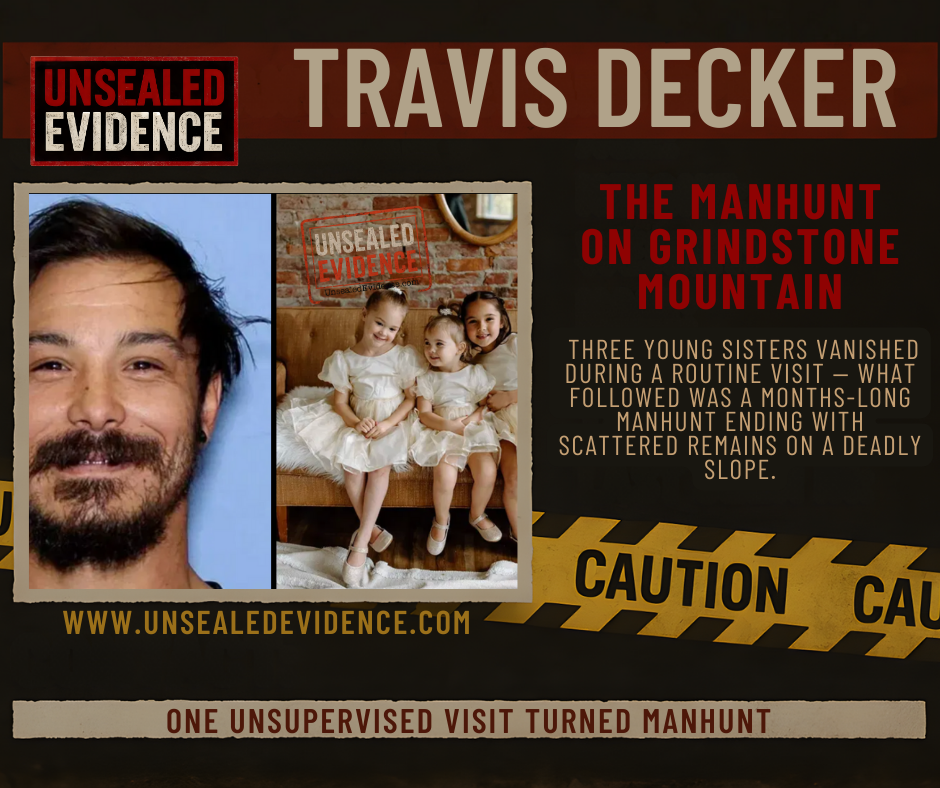
Cascade Tragedy: When Three Sisters Never Returned
Cascade Tragedy: When Three Sisters Never Returned A Promised Return On a quiet Friday afternoon in late May 2025, 32-year-old Travis Caleb Decker, a former U.S. Army infantry so

Christmas Nightmare: The Unsolved Murder of JonBenét Ramsey
Christmas Nightmare: The Unsolved Murder of JonBenét Ramsey The Morning the Ransom Note Appeared Christmas night in Boulder, Colorado ended quietly. Wrapping paper littere

Christmas Eve Vanishing: The Camila Mendoza Olmos Story
Christmas Eve Vanishing: The Camila Mendoza Olmos Story Camila Mendoza Olmos, a 19-year-old college student in northwest Bexar County, Texas, disappeared on the morning of Wednesd
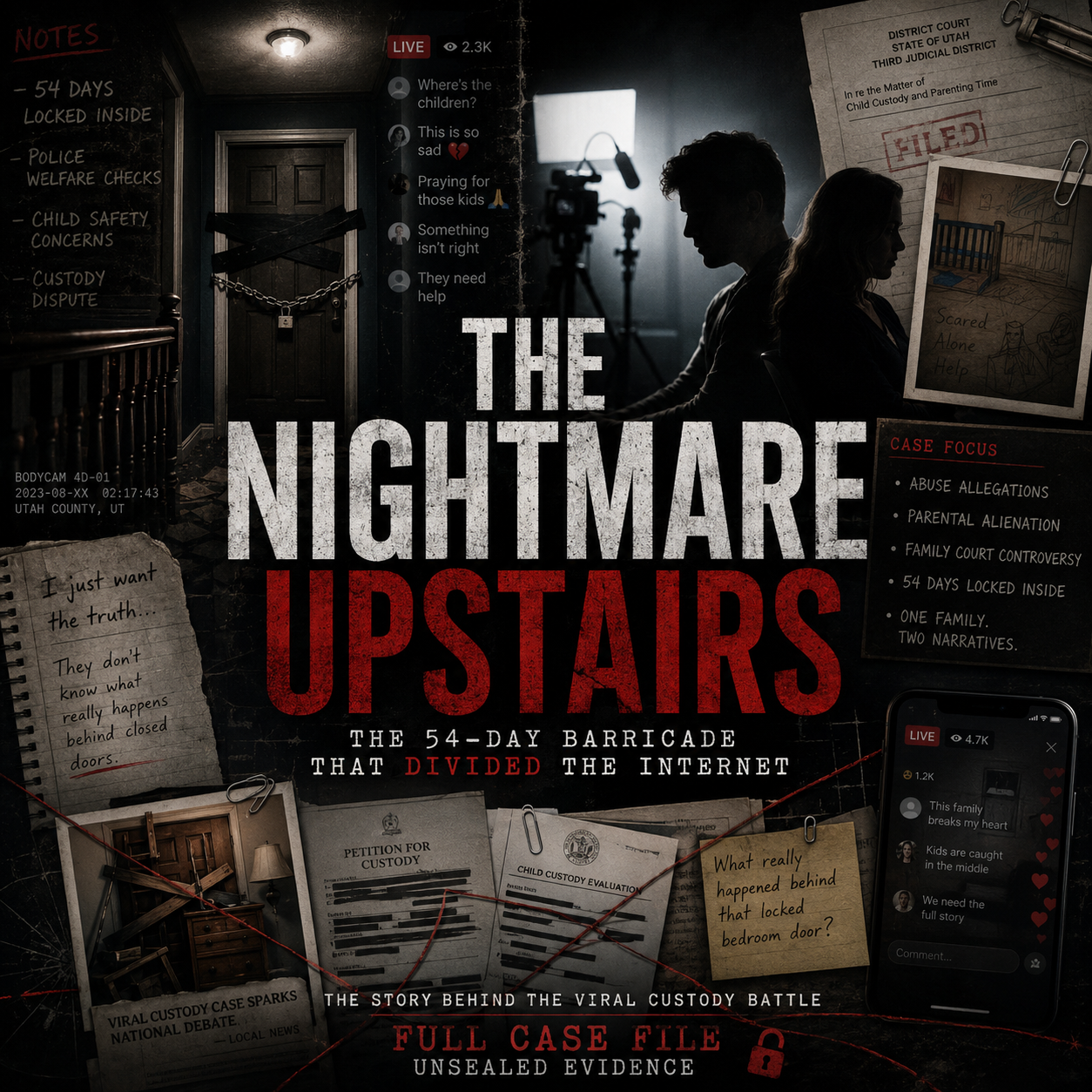
Behind the Locked Door: The Ty and Bryn Larson Custody Battle and the 54-Day Barricade
The Ty and Bryn Larson case became one of the most controversial and widely discussed family court stories in recent years after two Utah siblings barricaded themselves inside an u
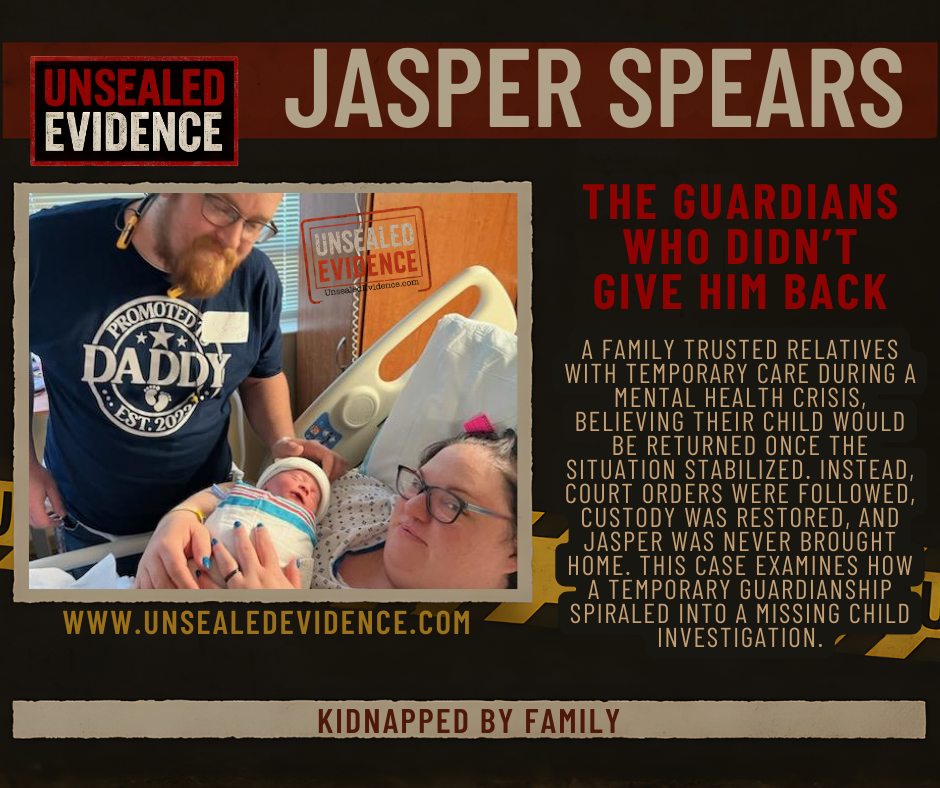
The Guardians Who Didn’t Give Him Back: Jasper Michael Spears
The Guardians Who Didn’t Give Him Back: The Disappearance of Jasper Michael Spears The Hospital Visit That Started Everything Jasper Michael Spears was born on November 6,

The Strongsville Impact: The Deaths of Dominic Russo and Davion Flanagan
In the early morning hours of July 31, 2022, a devastating crash in Strongsville left 20-year-old Dominic Russo and 19-year-old Davion Flanagan dead after a Toyota Camry driven by
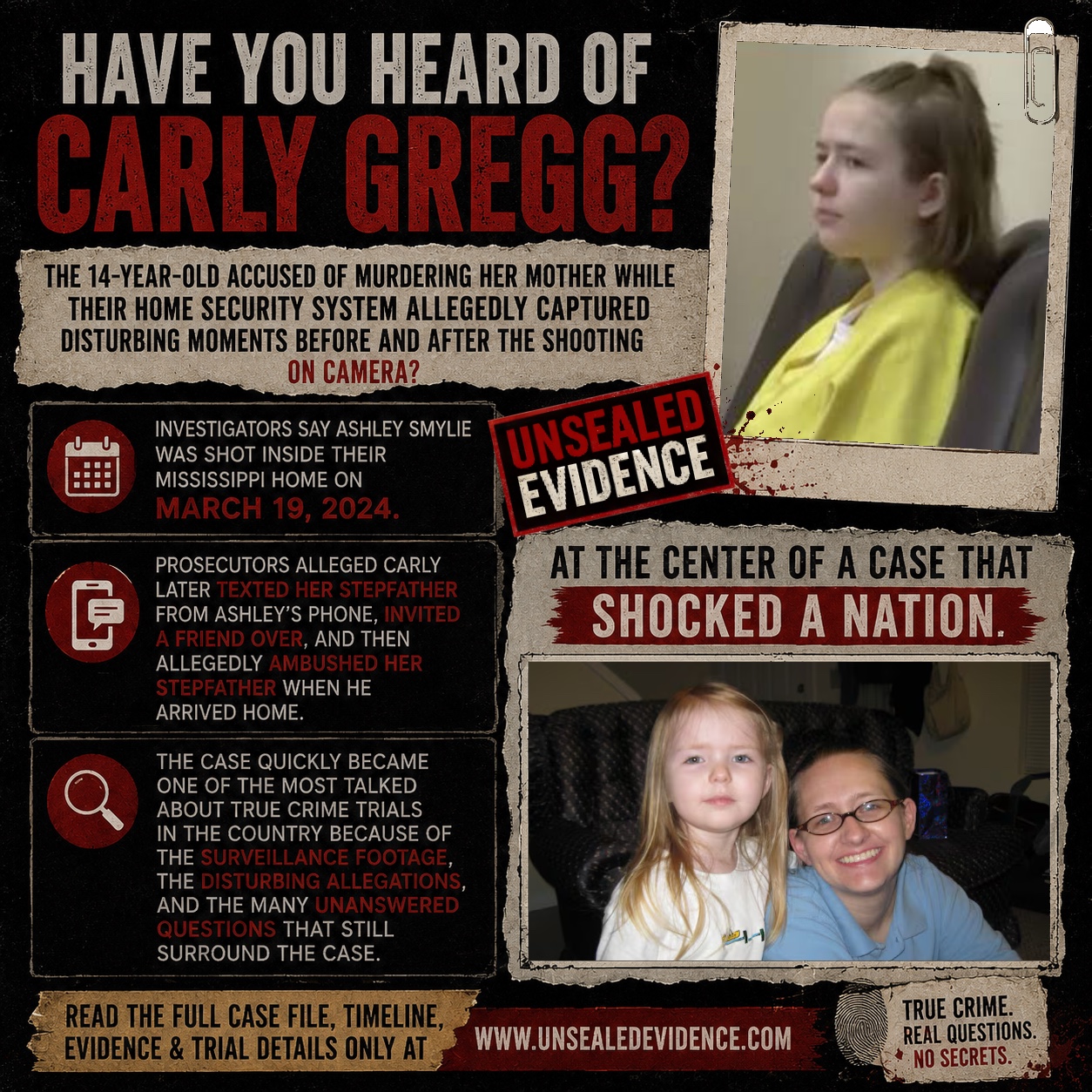
The Day the Silence Broke: A Human Account of the Carly Gregg Tragedy
March 19, 2024. A Tuesday. In the quiet, unassuming town of Brandon, Mississippi, a day that began with the mundane rhythm of school and work would spiral into a vortex of horror,
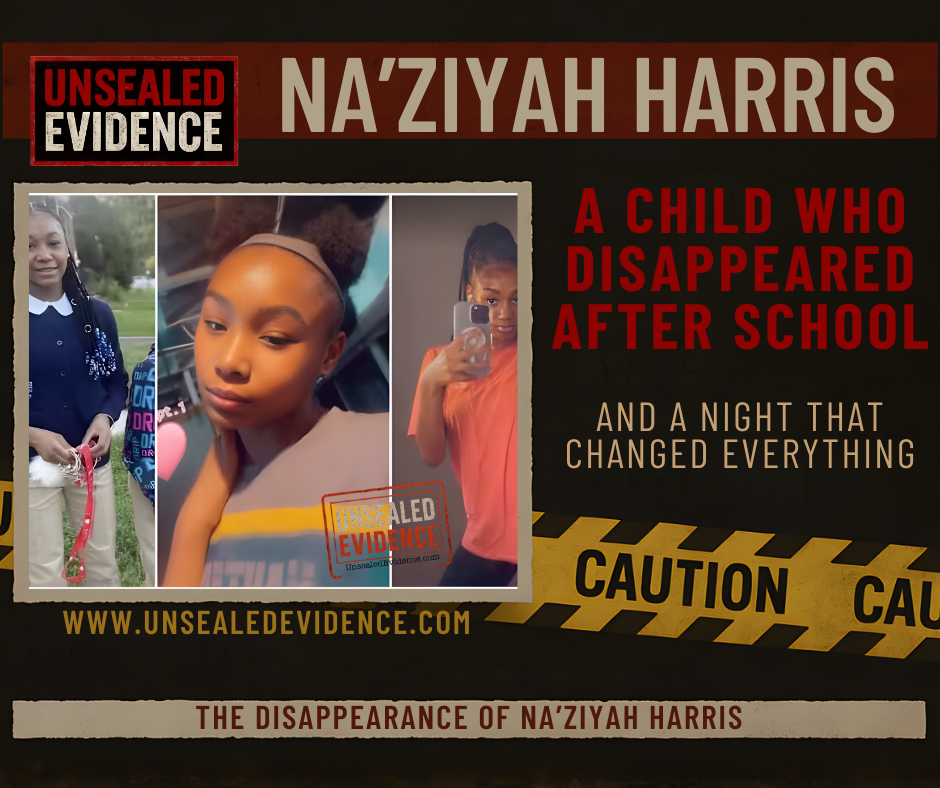
The Rugrats Coat Disappearance: The Killing of Na’Ziyah Harris Without a Body
Vanished After the Bus Stop: A Detroit Afternoon That Changed Everything On January 9, 2024, a thirteen-year-old girl stepped off her school bus on Detroit’s east side, wear