

The 2007 “Flower” Incident: FBI Interview Notes From the Epstein Files
This Unsealed Report examines the 2007 FBI interview notes commonly referred to as the “Flower” incident and explores why investigators documented a flower delivery connected to Jeffrey Epstein’s Florida estate and Royal Palm Beach High School. By analyzing the context surrounding the record, the report investigates questions of proximity, access, and how Jeffrey Epstein’s network intersected with environments involving minors. The investigation also explores how seemingly ordinary interactions can take on greater significance when viewed through the broader history of Epstein’s documented abuse, recruitment of underage girls, and ability to operate within trusted institutions for years.
Jeffrey Epstein was a documented pedophile who targeted minors.
That fact alone should permanently change how we read every record connected to him — even the ones that seem small, quiet, or easy to dismiss.
Because Epstein did not operate through chaos. He operated through normalization.
The “Flower” incident is one of those records.
What the “Flower” incident is
In FBI interview notes from 2007, an individual connected to Epstein’s Florida estate referenced a flower delivery.
Not to a private residence. Not to a business.
The delivery was made to Royal Palm Beach High School.
The document does not dramatize this moment. It does not explain it. It simply records the detail as part of a federal interview.
That alone is enough to stop and pay attention.
Why a high school changes everything
A high school is not a neutral setting.
It is a place filled with minors, governed by routines, schedules, and institutional trust. It is a space where adults assume that safeguards are already in place.
When a known predator’s orbit intersects — even indirectly — with a school environment, the question is not “what does this prove?”
The real question is: Why was this remembered, recorded, and preserved in an FBI interview?
How this connects directly to Epstein
Epstein’s abuse of minors did not happen in isolation. It happened because he was allowed proximity — to young people, to institutions, and to systems that assumed legitimacy.
The “Flower” incident matters because it shows how close that proximity could get to everyday environments involving children.
Even if the delivery itself was mundane, its presence in a federal interview tells us something important: investigators thought it was relevant enough to document.
Details like this are not written down accidentally.
Why predators rely on normal-looking interactions
Predators rarely announce themselves.
They rely on activities that appear harmless — deliveries, errands, introductions, favors — things that do not raise alarms on their own.
Epstein’s history shows us that he thrived in spaces where nothing looked overtly wrong on the surface.
That is how access is created. Not through obvious red flags, but through ordinary moments that no one thinks to question.
Why this should concern parents
Parents are taught to look for danger in obvious places.
But Epstein’s crimes demonstrate that danger often exists inside systems people trust — schools, institutions, and environments where oversight is assumed rather than actively enforced.
This post is not claiming that a flower delivery equals wrongdoing.
It is showing how close Epstein’s world came to spaces involving children — and how easily that proximity could be normalized.
The takeaway
The “Flower” incident does not exist to prove a single act.
It exists to remind us that Epstein’s access was not theoretical.
He moved through the world comfortably. He intersected with everyday environments. And those intersections were often recorded only after the fact — once the harm had already occurred.
Epstein did not succeed because no one noticed anything strange.
He succeeded because so many things looked normal enough to ignore.
Series Navigation 🔗
Continue Investigating
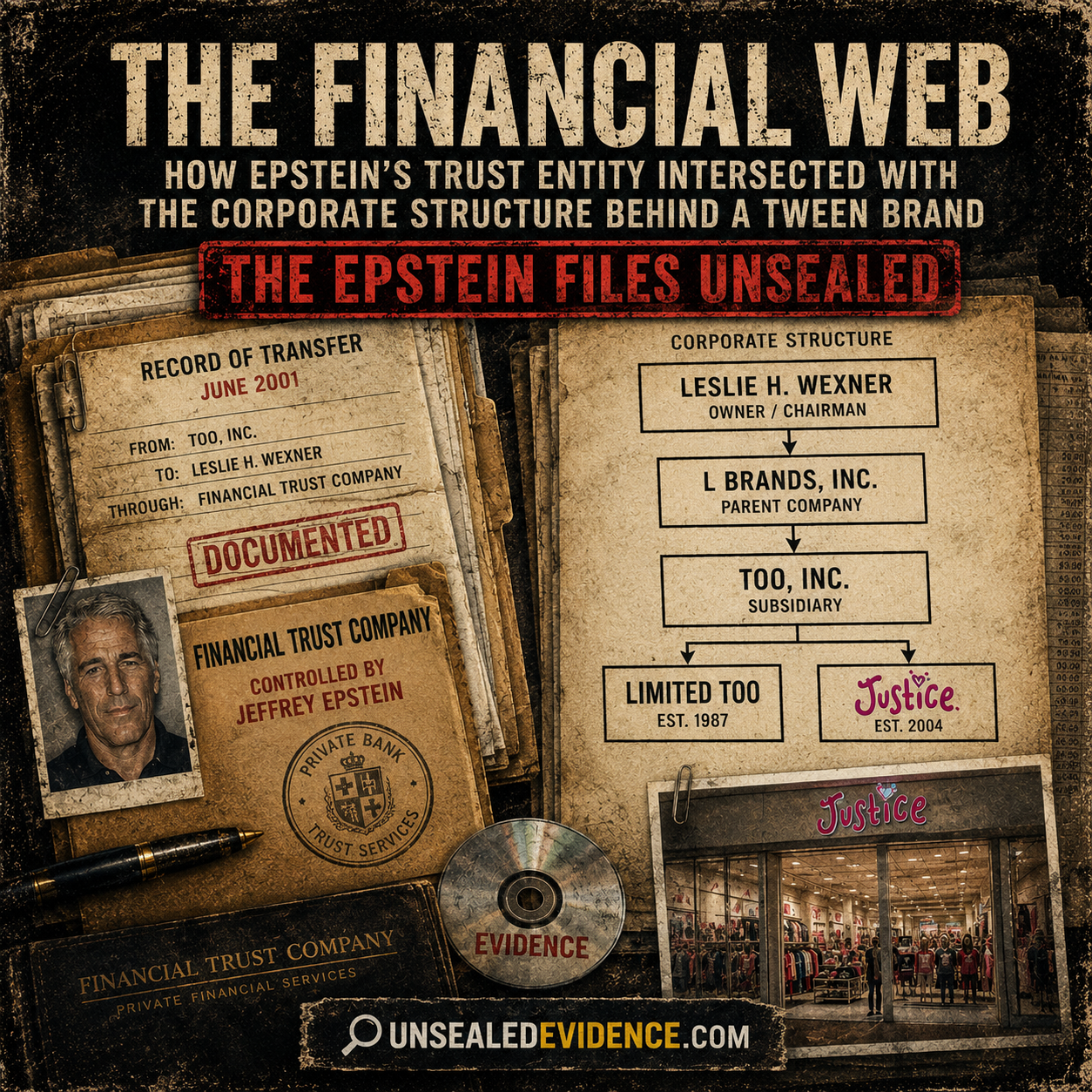
The Financial Web: How Epstein’s Trust Entity Intersected With the Corporate Structure Behind a Tween Brand
This Unsealed Report examines the documented financial connections between Jeffrey Epstein, Leslie Wexner, Financial Trust Company, and Too, Inc. Through a 2001 transfer record, the report explores how Epstein’s financial authority intersected with Wexner’s corporate structure, which later included the tween retail brand Justice. Rather than focusing on storefront operations, this investigation analyzes the corporate and financial architecture that placed Epstein within powerful institutions and examines how those connections fit into the broader network that allowed him to maintain influence for years.
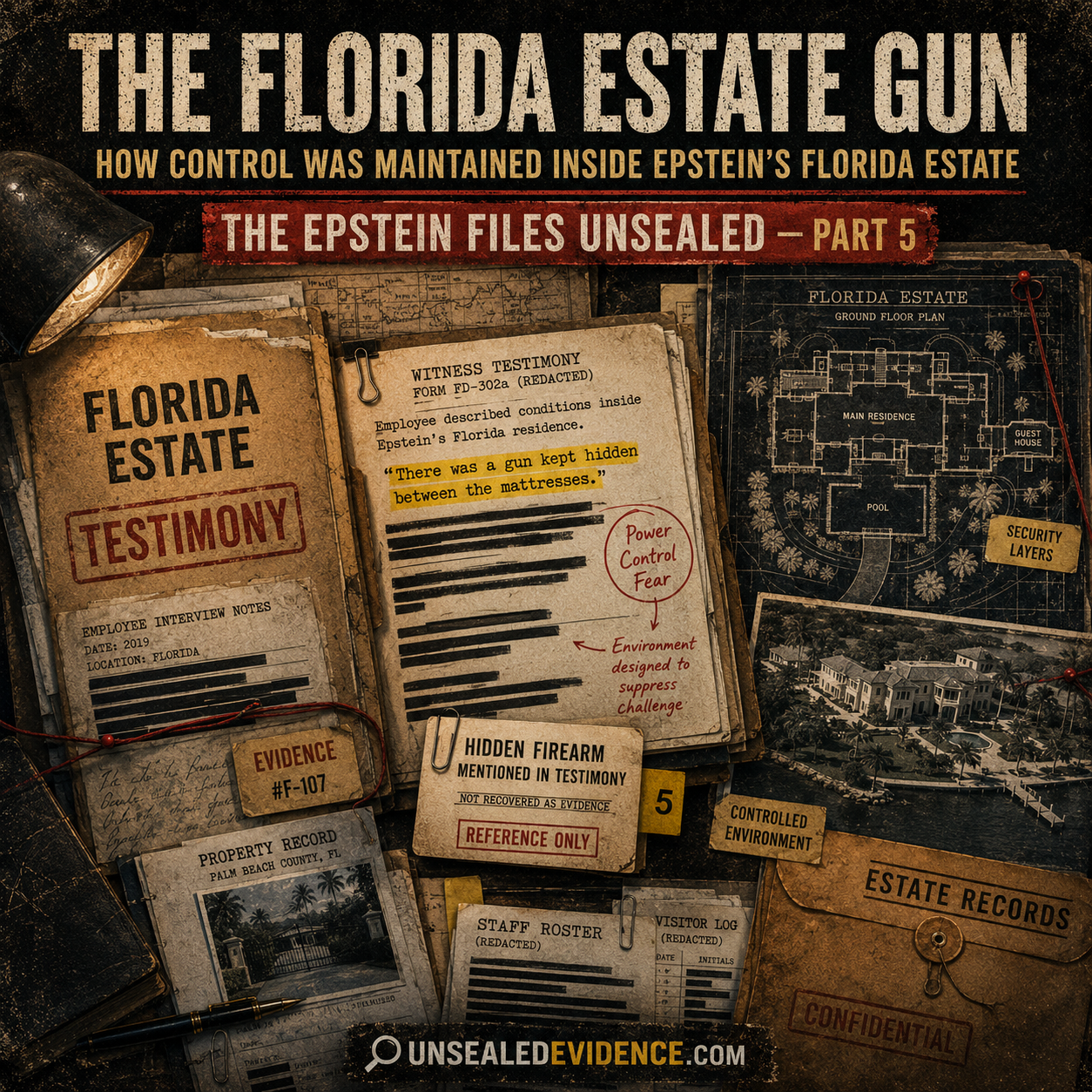
The Florida Estate Gun: Power, Fear, and How Epstein Controlled His Environment
This Unsealed Report examines testimony describing a hidden firearm inside Jeffrey Epstein’s Florida estate and explores how power, fear, and environmental control can reinforce abuse. Using records connected to the Epstein investigation, the report analyzes the role coercive environments play in protecting predators, silencing witnesses, and discouraging intervention. By examining the Florida Estate Gun record within the broader context of Jeffrey Epstein’s documented crimes against minors, this investigation explores how control, intimidation, and unequal power dynamics contributed to an atmosphere where abuse was able to continue for years.
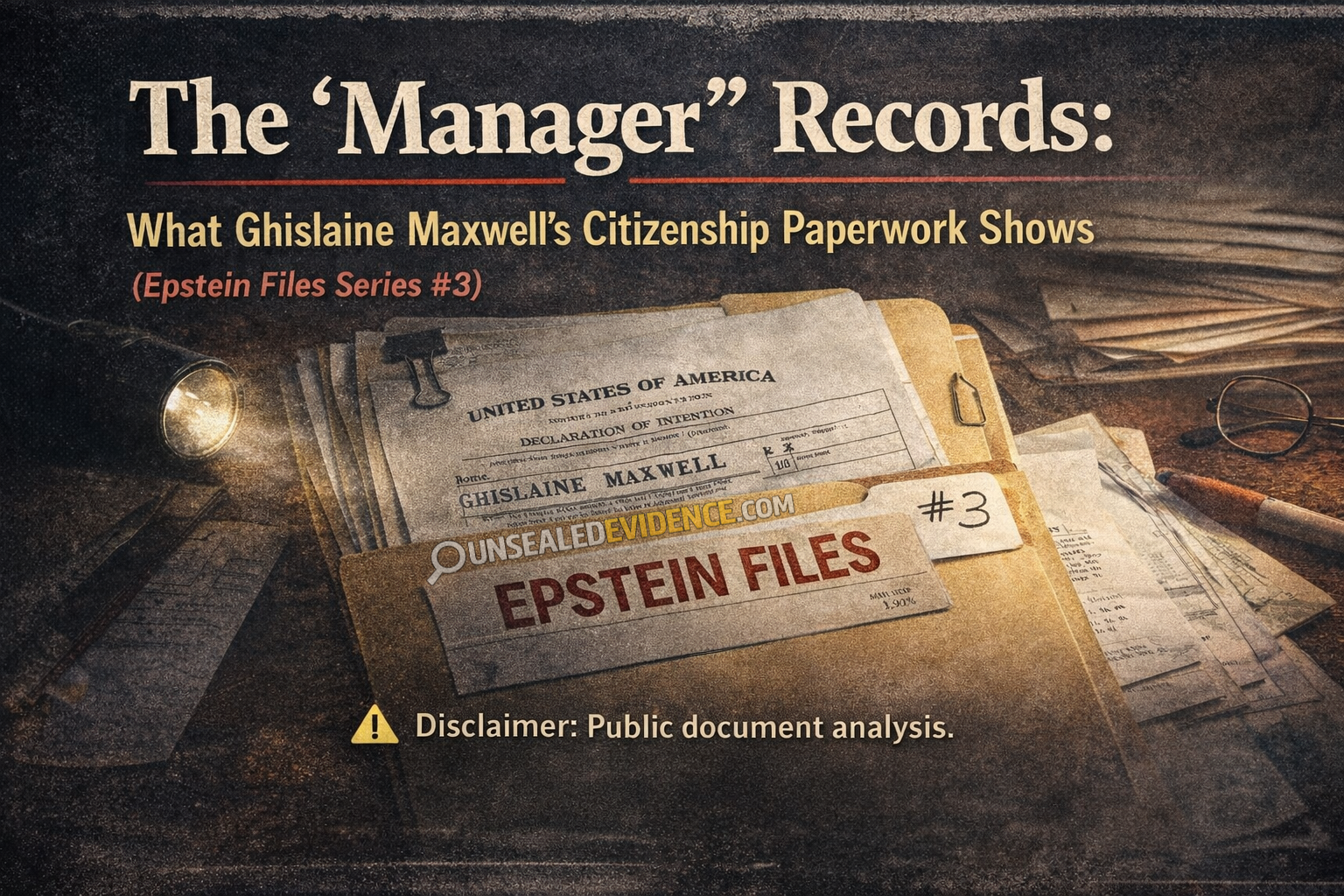
The “Manager” Records: What Ghislaine Maxwell’s Citizenship Paperwork Shows (Epstein Files Series #2)
This Unsealed Report examines records that list Ghislaine Maxwell’s occupation as “Manager” and explores how professional titles and administrative language can obscure deeper realities. By analyzing the role of paperwork, institutional trust, and surface-level credibility within Jeffrey Epstein’s network, the report investigates how seemingly ordinary documentation may have contributed to an environment where scrutiny was reduced and warning signs were overlooked. The investigation also examines how language, reputation, and perceived legitimacy helped shield Jeffrey Epstein and Ghislaine Maxwell from deeper questions for years while abuse continued behind the scenes.
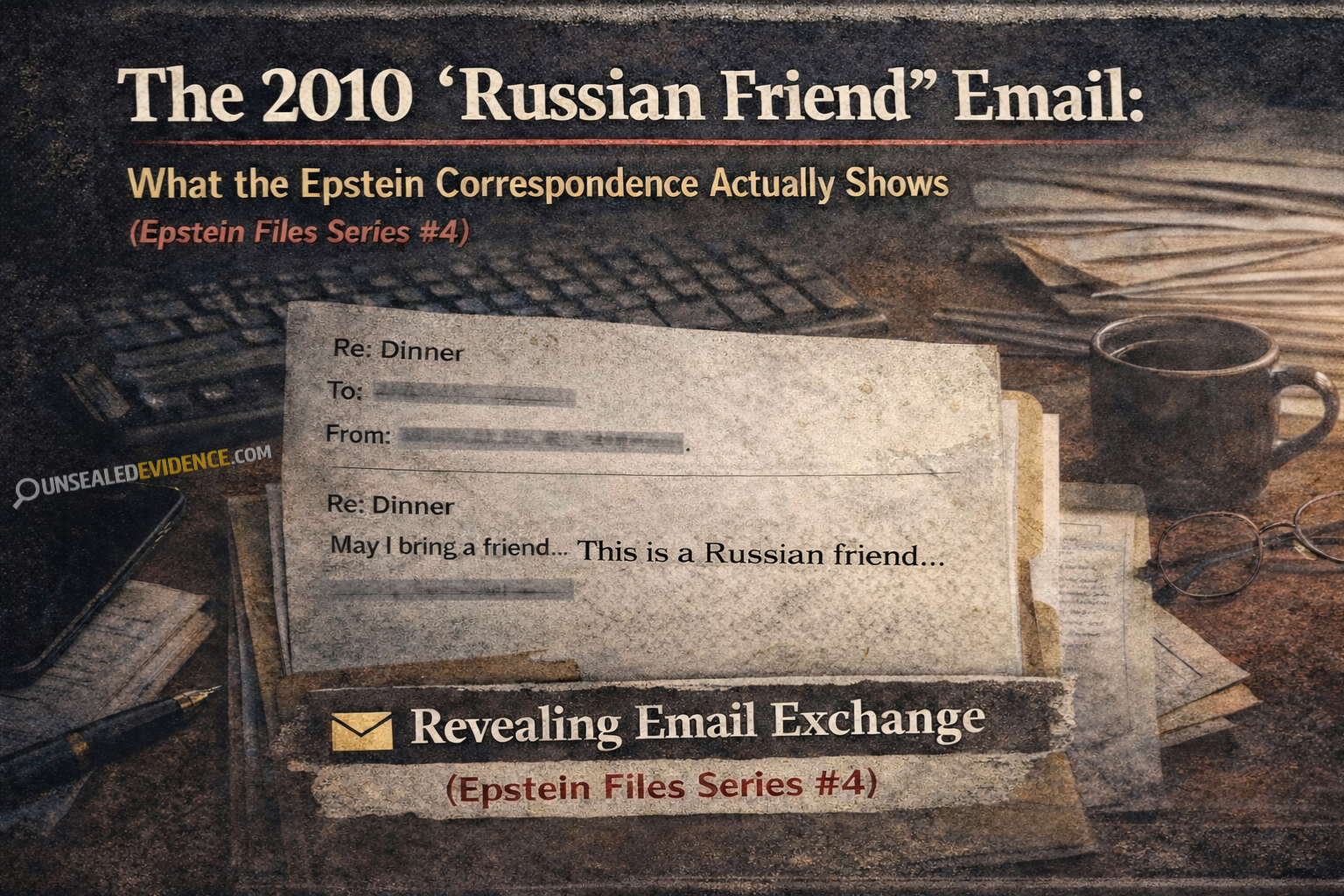
The 2010 “Russian Friend” Email: What the Epstein Correspondence Actually Shows (Epstein Files Series #4)
This Unsealed Report examines the 2010 “Russian Friend” email from Jeffrey Epstein and explores what the correspondence reveals about his continued access, influence, and social standing after his prior legal consequences became public. By analyzing the timing, language, and context of the email, the report investigates how Jeffrey Epstein remained embedded within elite social networks and continued arranging introductions involving young women despite widespread concerns surrounding his conduct. The investigation also examines broader questions about accountability, institutional failures, and how powerful individuals can maintain credibility and access long after serious allegations have emerged.
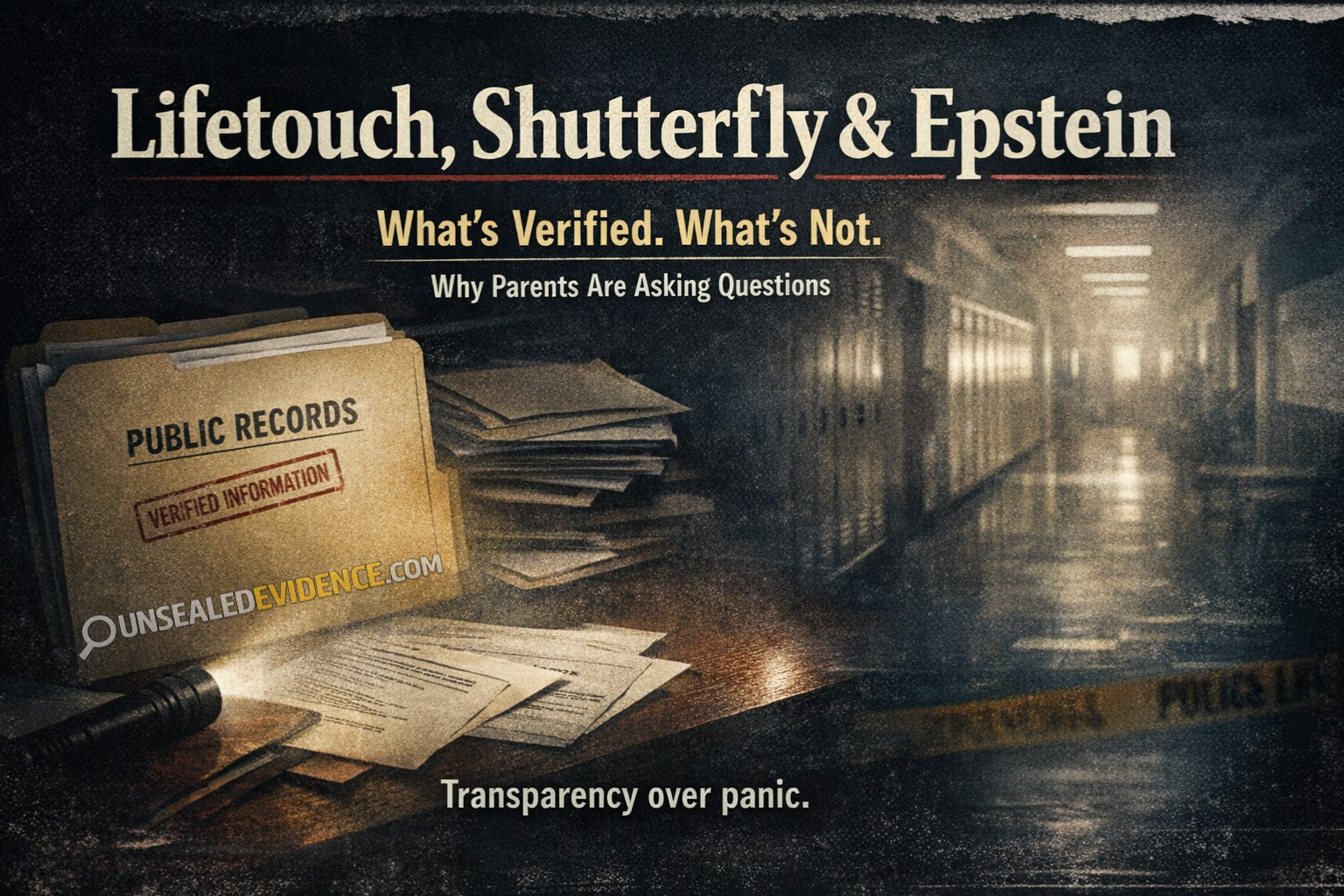
Lifetouch, Shutterfly, and Epstein: What’s Verified, What’s Not, and Why Parents Want Transparency
This Unsealed Report examines questions surrounding Lifetouch, Shutterfly, Apollo Global Management, and the documented financial relationship between Jeffrey Epstein and Leon Black. The report explores why parents have raised concerns about child-related data, school photography systems, and corporate ownership structures while emphasizing that there is no public evidence linking Epstein to Lifetouch operations or student information. By analyzing Epstein’s history of exploiting access, influence, and trusted institutions, the investigation examines broader issues of transparency, child safety, data security, and the safeguards parents should expect from companies and vendors that work with schools and minors.
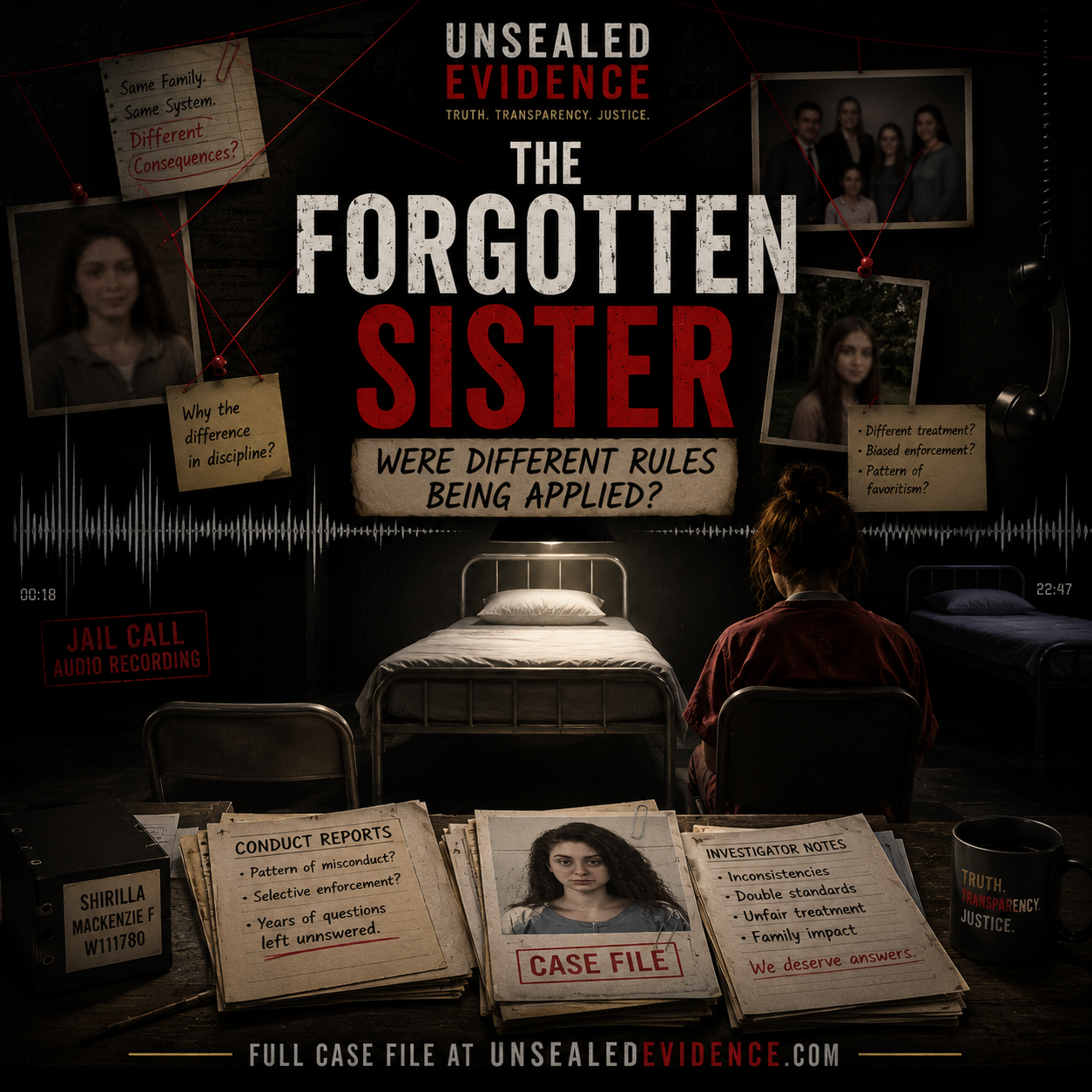
The Forgotten Sister: Was Danielle Shirilla Held To Different Standards Than Mackenzie?
One comment buried inside a recorded jail call has people asking a question few seem interested in discussing: what was life like for Danielle Shirilla? While Mackenzie Shirilla became the focus of documentaries, headlines, and public attention, her older sister remains almost entirely absent from the story. A remark about Danielle losing her bed frame has reignited conversations about whether both daughters were held to the same standards.
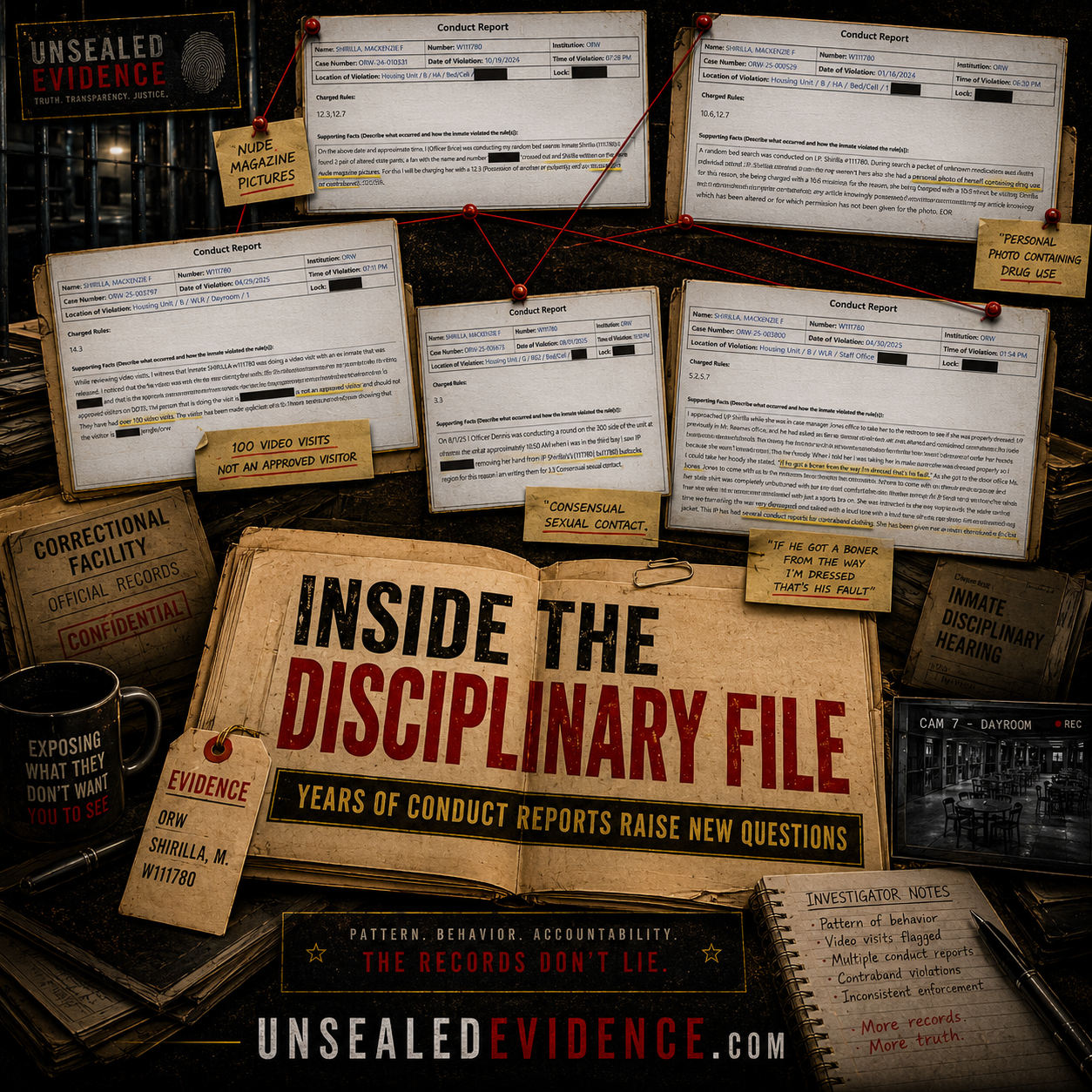
Nude Photos, Explicit Video Calls, Unauthorized Medication and More: Inside Mackenzie Shirilla's Prison Disciplinary File
What exactly has Mackenzie Shirilla been getting written up for while behind bars? Newly obtained disciplinary records reveal allegations involving nude magazine photos, unauthorized medication, explicit video calls, stolen property, contraband, and more.
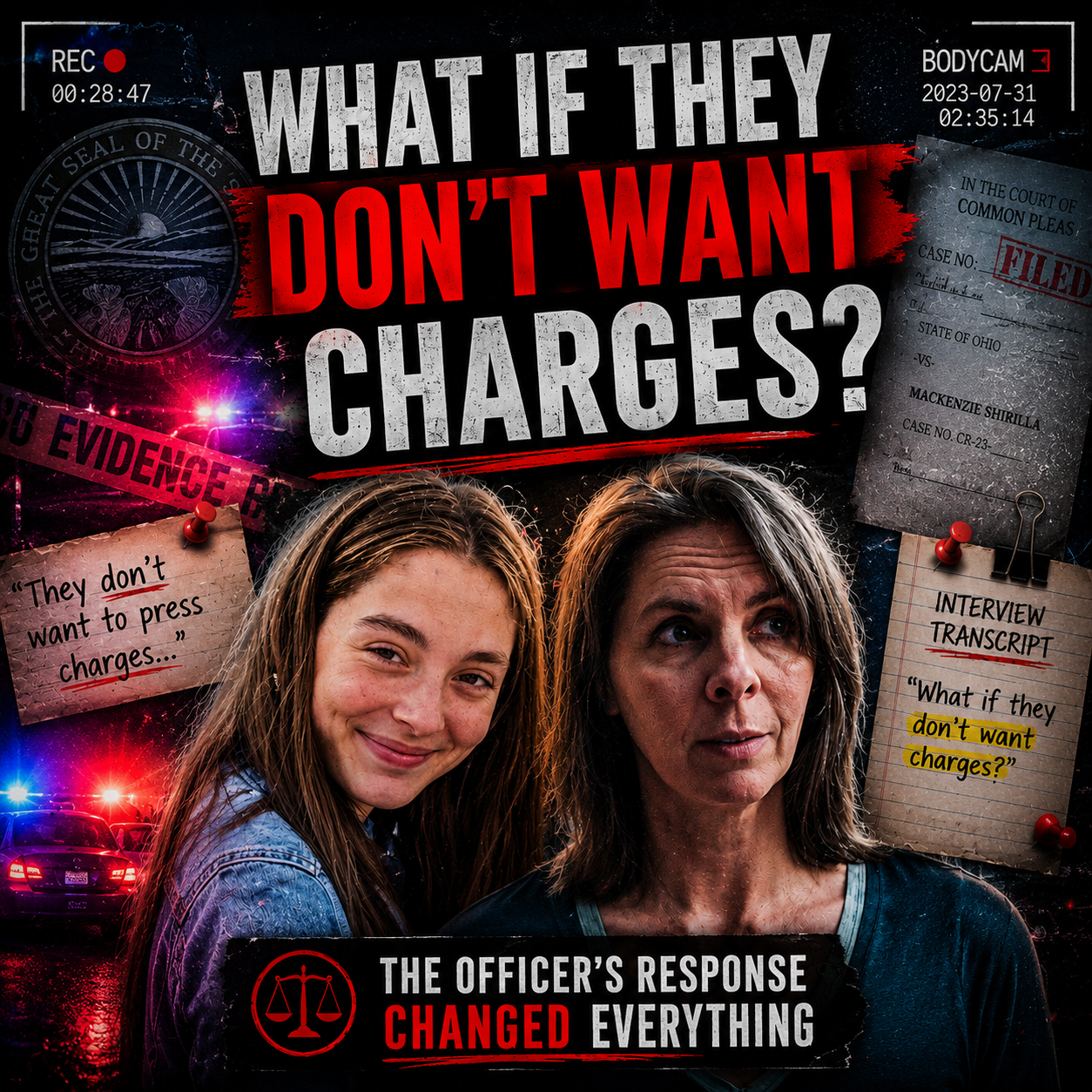
"What If The Families Don't Want Charges?" The Bodycam Exchange People Can't Stop Talking About
One of the most revealing moments in the newly released Mackenzie Shirilla bodycam footage has nothing to do with the crash itself. Instead, it centers on a conversation about whether Dominic Russo's and Davion Flanagan's families wanted criminal charges filed—and the officer's explanation of why that decision was no longer up to them.